 Recycling and pelletizing
9 types
Recycling and pelletizing
9 types
 Extrusion
8 types
Extrusion
8 types
 Mixing equipment
2 types
Mixing equipment
2 types
 Conveying and storage
8 types
Conveying and storage
8 types
 Drying and cooling
2 types
Drying and cooling
2 types
 Cutting, pressing and packaging
4 types
Cutting, pressing and packaging
4 types
 Plastic processing machinery
3 types
Plastic processing machinery
3 types
 Electromechanical equipment
7 types
Electromechanical equipment
7 types
 Miscellaneous machinery
11 types
Miscellaneous machinery
11 types
 Polymer Recycling: Process, Types, and Industrial Approach
Polymer recycling is no longer simply a “green” communication topic, but a true issue of industrial competitiveness. In a context where raw material availability, quality requirements, and regulatory pressure are increasing simultaneously, recycling polymers means mastering processes capable of transforming waste into stable, usable, and traceable material.
This involves far more than simply grinding plastic. It requires understanding material aging, contamination, separation systems, and the technologies capable of reintegrating polymers into a production cycle without compromising quality.
For this reason, polymer recycling must be approached as part of a complete industrial plastic recycling process, where every stage directly influences the quality of the final material.
Understanding Polymer Recycling in Industry
The Polymer as a Molecular Structure
A polymer is a molecular chain whose structure determines its mechanical, thermal, and chemical properties. During initial manufacturing, this structure is carefully controlled. However, once the material has been used, it may become degraded, oxidized, or contaminated.
Recycling therefore consists of restoring a certain level of stability to a material that has already gone through a complete life cycle. This reality explains why sorting, washing, drying, and final processing must all be considered part of a coherent industrial system.
Recyclable Product vs Recycled Material
It is essential to distinguish between the theoretical recyclability of a product and the actual quality of the recovered material. A package may technically be recyclable, but still become unusable if the stream is contaminated, poorly sorted, or incompatible with the intended application.
Types of Polymers and Their Impact on Recycling
Thermoplastics and Thermosets
Thermoplastics can be melted and reprocessed, making them suitable for mechanical recycling. Thermosetting plastics, on the other hand, do not melt and therefore require specific recycling approaches or alternative recovery methods.
Main Polymer Families
- PE and PP: widely used and mechanically recyclable when streams are homogeneous.
- PET: broadly recycled, but sensitive to moisture and contamination.
- PS: recycling efficiency depends on collection quality and local market conditions.
- PVC: recyclable material requiring strict thermal control because of its sensitivity during processing.
Each polymer family imposes specific industrial constraints. For example, industrial PVC recycling requires precise temperature management, additive control, and material stabilization in order to avoid degradation during processing.
Polymer Recycling Codes
The Purpose of Recycling Codes
Recycling codes provide an initial identification of plastic families and facilitate preliminary sorting operations. They are useful for directing waste streams, particularly in collection and pre-treatment systems.
Limitations in Industrial Environments
These codes do not provide information about additives, fillers, pigments, contaminants, or multilayer structures. In industrial recycling operations, they must therefore be complemented with more advanced sorting technologies and regular quality control systems.
Main Polymer Recycling Routes
Mechanical Recycling
Mechanical recycling consists of sorting, grinding, washing, drying, and remelting the material in order to obtain reusable raw material. It is efficient when the waste stream is clean, stable, and homogeneous.
This route is particularly suitable for post-industrial waste streams or for certain well-separated post-consumer streams because it preserves high material value with relatively manageable industrial infrastructure.
Chemical Recycling
Chemical recycling transforms polymers into reusable molecules or chemical fractions. It is mainly used for complex, mixed, or heavily degraded waste streams that cannot be efficiently treated through mechanical recycling.
This approach can significantly expand recovery possibilities, but it requires sufficient processing volumes, adapted infrastructure, and rigorous economic evaluation.
Stages of Mechanical Polymer Recycling
Sorting and Separation
Sorting is a critical stage that directly determines the quality of the final recycled material. Poor separation may generate major defects in the recycled product, including black specks, color variations, mechanical property losses, or processing incompatibilities.
Grinding and Size Reduction
Grinding transforms waste into fragments suitable for downstream processing stages. Incorrect adjustment may generate excessive fines, increase material losses, or reduce washing efficiency.
Washing and Contaminant Removal
Washing removes organic residues, adhesives, labels, dust, and other impurities. It strongly influences the final quality of recycled polymers, especially when the material must be reintroduced into demanding industrial processes.
Drying
Drying is essential to avoid processing defects and limit thermal degradation. Excessive residual moisture may cause bubbles, hydrolysis, viscosity loss, or instability in the finished product.
Re-Pelletizing
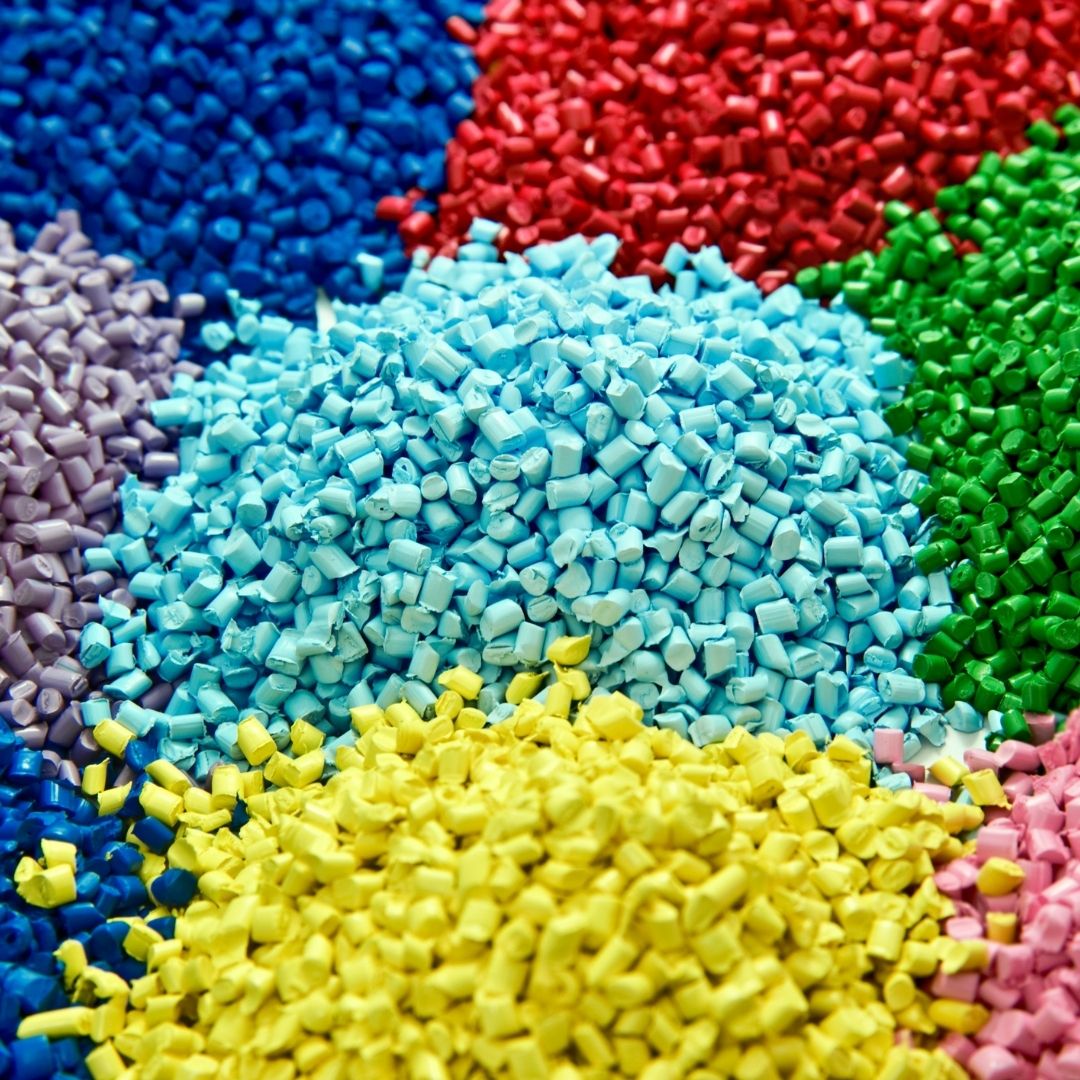
The material is melted and transformed into pellets through extrusion. This stage stabilizes the material, homogenizes the batch, and makes it industrially usable.
At this stage, pelletizing equipment for recycled polymers plays a central role because it converts flakes or ground material into uniform pellets that are easier to dose, store, and reuse in new production cycles.
Chemical Recycling of Polymers
When to Use Chemical Recycling
Chemical recycling is used when waste streams are too complex, mixed, or degraded for mechanical recycling. This may include multilayer plastics, highly contaminated materials, or streams that are difficult to separate using conventional methods.
Industrial Constraints
This approach requires dedicated infrastructure, stable processing volumes, and rigorous economic evaluation. It must also be analyzed according to waste stream availability, energy costs, and the quality of the resulting products.
Mechanical Recycling vs Chemical Recycling
Comparison Between Both Approaches
- Mechanical recycling: simpler, more economical, and suitable for clean streams.
- Chemical recycling: more complex, but useful for difficult or mixed waste streams.
Choosing the Right Process
The choice depends on waste type, expected quality, available industrial infrastructure, and the targeted end market. In many situations, both approaches are not opposed but complementary depending on the nature of the processed waste streams.
Quality of Recycled Polymers
Material Degradation
Polymers undergo thermal, chemical, or mechanical degradation during their life cycle and recycling operations. This degradation may modify viscosity, mechanical resistance, color, or overall material stability.
Contamination
Impurities and incompatible material mixtures are among the main causes of quality loss. Even a small quantity of incompatible polymer may be enough to degrade an entire batch.
Batch Variability
The stability of recycled products strongly depends on stream control and process standardization. The more stable and traceable the material origin is, the easier it becomes to produce reliable recycled polymers.
Industrial Applications of Recycled Polymers
Main Industrial Sectors
- Non-food packaging.
- Logistics and transport.
- Construction and infrastructure.
- Industrial technical parts.
- Extruded, injected, or thermoformed products depending on material quality.
Some recycled polymers already play a major role in industry. This is the case for recycled HDPE industrial applications, widely used in sectors where material resistance, rigidity, and dimensional stability are essential.
Integration into Industrial Production
Recycled material is often directly reintegrated into industrial production processes, especially in controlled post-industrial streams. However, this integration requires strong knowledge of the material, its limitations, and its behavior during transformation.
Recycling, Product Life Cycle, and Material Strategy
Polymer recycling cannot be isolated from the rest of the industrial value chain. It depends on product design, material selection, additives, collection systems, and the availability of industrial applications.
Analyzing the plastic life cycle helps identify where value losses occur, where recyclability constraints appear, and where industrial improvement opportunities exist.
Conclusion
Polymer recycling is a complete industrial system that combines material science, processing technologies, and final applications. Its success depends on the ability to control waste streams, stabilize materials, and adapt technologies to real industrial conditions.
When properly mastered, polymer recycling becomes both an economic and environmental performance driver for the plastics industry.