 Recycling and pelletizing
9 types
Recycling and pelletizing
9 types
 Extrusion
8 types
Extrusion
8 types
 Mixing equipment
2 types
Mixing equipment
2 types
 Conveying and storage
8 types
Conveying and storage
8 types
 Drying and cooling
2 types
Drying and cooling
2 types
 Cutting, pressing and packaging
4 types
Cutting, pressing and packaging
4 types
 Plastic processing machinery
3 types
Plastic processing machinery
3 types
 Electromechanical equipment
7 types
Electromechanical equipment
7 types
 Miscellaneous machinery
11 types
Miscellaneous machinery
11 types
CYCLONES
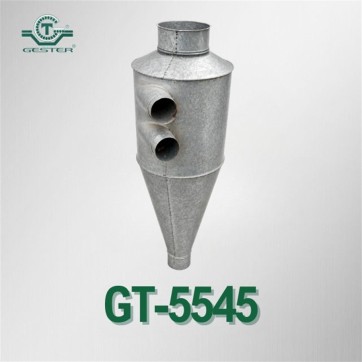
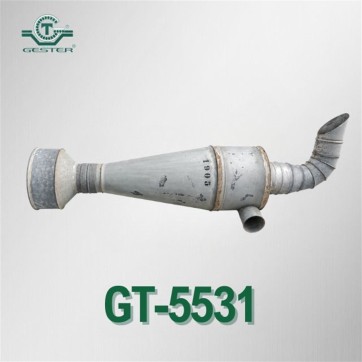
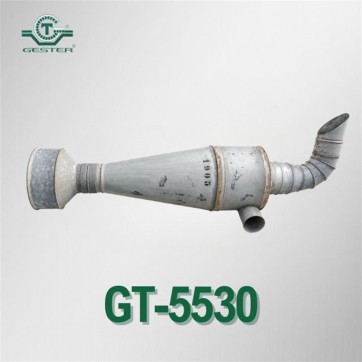
Industrial Cyclones
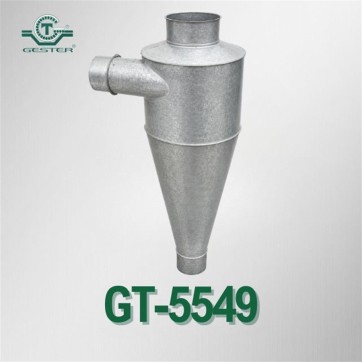
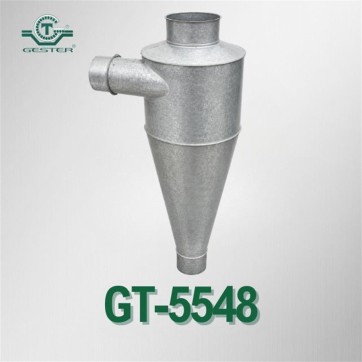
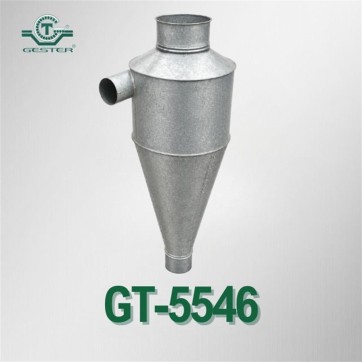
Industrial cyclones are separation devices that use centrifugal force to remove solid particles from moving air or gas streams. They are widely used in plastic recycling, material processing, manufacturing and industrial air-treatment systems to recover valuable material, protect downstream machinery and reduce the concentration of airborne dust.
At Gester, we offer second-hand industrial cyclones selected according to their condition, technical specifications and potential application. These machines provide a cost-effective option for companies that need reliable particle separation equipment without the investment required for a newly manufactured system.
How Does an Industrial Cyclone Work?
An industrial cyclone introduces contaminated air tangentially into a cylindrical or conical chamber. The resulting rotational movement generates centrifugal force, pushing heavier particles towards the outer walls. These particles then fall into a collection point, while the cleaner air leaves through an upper outlet.
Cyclones are often integrated into larger conveying and storage machinery systems. Within these installations, they can separate transported material from an air stream before it enters a hopper, silo, container or subsequent processing machine.
Applications that combine pneumatic material movement, dust recovery and vacuum generation may require more complete air conveying, cyclone and vacuum equipment. These systems can help move powders, granules, flakes and other lightweight materials through pipelines while maintaining a controlled production flow.
Why Choose an Industrial Cyclone System?
Cyclones provide an effective and economical solution for particle separation in demanding industrial environments. Their relatively simple construction, absence of moving internal components and ability to operate continuously make them suitable for a wide range of production processes.
- High separation efficiency: Industrial cyclones can remove dust, flakes and other solid particles from moving air or gas streams.
- Reduced equipment wear: By removing larger particles before they reach downstream machinery, cyclones can help protect fans, filters and other processing equipment.
- Low maintenance requirements: Cyclones generally do not rely on replaceable filter elements for their primary separation function.
- Continuous operation: Their design allows them to process a constant airflow without frequent interruptions.
- Wide industrial compatibility: Cyclones can be used in plastics, recycling, biomass, woodworking, agriculture, chemicals and manufacturing.
Industrial Cyclones in Plastic Recycling
In plastic recycling plants, industrial cyclones are commonly used to separate flakes, regrind, fines and dust from conveying air. They may be installed after shredding or size-reduction stages to recover processed material and prepare it for storage, drying, mixing or extrusion.
When connected to plastic granulators and grinders, a cyclone can receive the resulting plastic particles through a pneumatic conveying line. The material is then separated from the airflow and discharged into a bag, hopper, container or another machine within the recycling process.
Moisture control may also be necessary after washing or before extrusion. In these cases, cyclones can operate alongside plastic drying and dehumidification equipment, helping transfer and separate plastic material before or after the drying stage.
Industrial Cyclones and Filtration Systems
An industrial cyclone is often used as a pre-separator rather than as the only air-cleaning device. It can remove larger and heavier particles before the airflow reaches a secondary filtration stage, reducing the amount of material that the filters must retain.
For applications involving fine dust or stricter air-quality requirements, cyclones may be combined with bag and cartridge filters. This configuration allows the cyclone to capture coarse particles first, while the filtration equipment retains smaller particles that remain suspended in the airflow.
Using a cyclone before a filtration system can help reduce filter loading, limit cleaning frequency and extend the useful life of consumable filter elements. The exact arrangement will depend on the particle size, airflow volume, dust concentration and required level of separation.
Benefits of Buying a Second-Hand Industrial Cyclone
Purchasing a used industrial cyclone can substantially reduce the initial cost of improving a material-handling or dust-separation system. Second-hand equipment may also be available more quickly than a custom-built machine, helping companies replace damaged equipment or increase production capacity with less delay.
- Lower acquisition cost: Used cyclones generally require a smaller investment than new equipment.
- Faster availability: Machines already in stock can often be incorporated into a facility sooner.
- Robust construction: Industrial cyclones are typically manufactured from durable materials intended for prolonged operation.
- Flexible integration: A suitable cyclone can be connected to existing conveyors, fans, grinders, filters, hoppers and storage systems.
- Reduced environmental impact: Reusing industrial equipment extends its working life and limits the resources needed to manufacture a new machine.
How to Select the Right Industrial Cyclone
Selecting the appropriate cyclone requires an evaluation of both the material and the process in which it will operate. A unit that is too small may restrict airflow, while an oversized or unsuitable model may not achieve the required separation efficiency.
- Particle size and density: Larger and denser particles are generally easier to separate than very fine or lightweight dust.
- Airflow capacity: The cyclone must be capable of handling the air volume generated by the conveying or extraction system.
- Material characteristics: Abrasive, corrosive, hot or moisture-sensitive products may require specific construction materials.
- Production capacity: The discharge system must accommodate the expected quantity of separated material.
- Installation space: The cyclone dimensions, inlet arrangement and discharge height must match the available plant layout.
- Connection requirements: Inlet and outlet diameters should be compatible with the existing ducts, fans and processing machinery.
Frequently Asked Questions
Explore our available industrial cyclones and find a practical solution for improving particle recovery, material conveying and air treatment within your production facility. Contact Gester for current availability, technical specifications or assistance selecting suitable equipment.
Last blog articles
Industrial Machinery Transport in Spain: Safe and Efficient Solutions
What Is an Extruder, How Does It Work, and What Is It Used For ?
HDPE or High-Density Polyethylene: What Is It, Properties, and Uses
Screw Compressor: What Is It, How It Works, Types, and Advantages
Indirect extrusion: what it is, how it works, and applications
See all