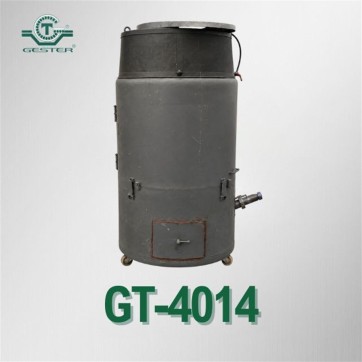
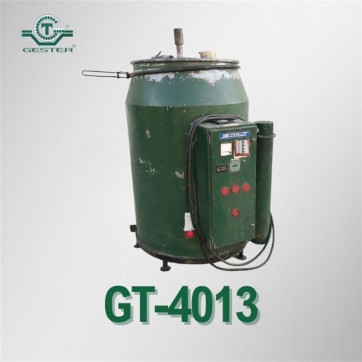
Used Plastic Resin Dryers and Drying Equipment
Plastic resin dryers are essential equipment for companies involved in plastic processing, helping remove excess moisture from raw materials before injection moulding, extrusion and other manufacturing operations. Proper drying conditions are important to maintain material quality, prevent production defects and achieve consistent results throughout industrial processes.
At Gester, we specialise in supplying used plastic dryers, resin drying hoppers and industrial dehumidifying equipment for different production requirements. Our catalogue includes second-hand machinery from recognised manufacturers, providing companies with reliable and cost-effective alternatives to purchasing new equipment.
Whether you need a compact plastic resin dryer for an individual production machine or a larger drying system for industrial applications, our team can help you evaluate the available equipment and identify a solution suited to your processing requirements.
Why Are Plastic Resin Dryers Important?
Moisture control is an important part of plastic manufacturing. Many thermoplastic materials absorb moisture from the surrounding air, which can affect their behaviour during melting and processing.
When hygroscopic resins are processed without adequate drying, absorbed moisture may cause hydrolytic degradation, resulting in reduced mechanical properties and defects in the finished product. Depending on the material and process, excess moisture can also contribute to bubbles, surface imperfections and inconsistent production quality.
A plastic resin dryer helps reduce moisture content before the material enters an injection moulding machine, extruder or other processing equipment. By maintaining appropriate drying conditions, manufacturers can improve material preparation and reduce the risk of moisture-related defects.
The drying process depends on several factors, including the type of polymer, initial moisture content, operating temperature, airflow, drying time and required dew point.
Types of Plastic Drying Systems
Different materials and production processes require specific drying technologies. At Gester, we offer several types of plastic drying equipment, including dehumidifiers, material dryers and systems incorporating drying hoppers.
Plastic Resin Dehumidifying Dryers
Dehumidifying dryers are designed to remove moisture from plastic resins using air with a controlled low dew point. These machines are particularly useful for hygroscopic materials that require intensive drying before processing.
In many systems, the drying air passes through a desiccant material that absorbs moisture. The dry air is then heated and circulated through the plastic pellets, helping remove absorbed moisture while maintaining controlled processing conditions.
Industrial resin dryers are commonly used for materials such as PET, polyamide, polycarbonate and other engineering thermoplastics that require specific moisture levels before melting.
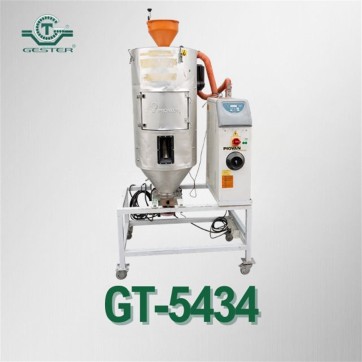
At Gester, our catalogue includes equipment such as the PIOVAN D5 503 dehumidifier, featuring a 125-litre silo and 2.1 kW of installed power.
Hot-Air Plastic Material Dryers
Hot-air dryers use heated airflow to reduce moisture in plastic materials before processing. These systems are often used in applications where surface moisture removal is required or where the material does not need the intensive drying conditions provided by a dehumidifying dryer.
A plastic material dryer typically circulates heated air through a hopper containing plastic pellets or granules. The airflow transfers heat to the material and carries moisture away from the drying chamber.
These machines can be suitable for certain non-hygroscopic polymers and other applications where standard hot-air drying provides sufficient moisture control.
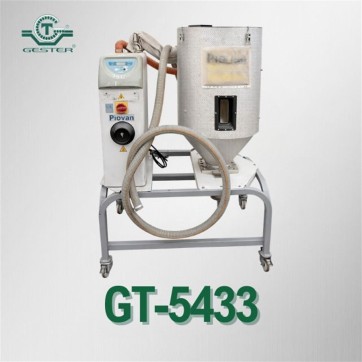
At Gester, we offer equipment such as the RAGA industrial material dryer, featuring a 500-litre capacity and 8 kW of installed power.
Resin Hoppers and Drying Hoppers
A resin hopper is used to hold plastic pellets, granules or other raw materials before they enter a production machine. In industrial plastic processing, hoppers help maintain a continuous and controlled supply of material.
When equipped with appropriate heating and airflow connections, a hopper can form part of a drying system. These configurations are commonly known as drying hoppers and allow plastic resins to remain under controlled drying conditions before processing.
Depending on the installation, drying hoppers may be mounted directly above injection moulding machines or extruders, or connected to central material drying and conveying systems.
Choosing the right resin hopper depends on the required capacity, material characteristics, drying time and compatibility with the existing equipment.
Central Plastic Drying and Dehumidification Systems
Central plastic drying systems are designed to manage material drying requirements across several production machines. These installations may combine dehumidifying units, drying hoppers, material loaders and conveying equipment.
Depending on their configuration, central drying systems can offer several advantages:
- Centralised Process Control: Drying conditions can be managed from a coordinated installation.
- Continuous Material Supply: Dried resin can be transferred to different processing machines according to production requirements.
- Reduced Manual Handling: Automated material conveying can minimise the need for operators to move plastic pellets between machines.
- Flexible Production: Different hoppers and drying circuits can support multiple materials and processing requirements.
- Improved Production Organisation: Centralised equipment can help simplify material preparation and distribution throughout the manufacturing facility.
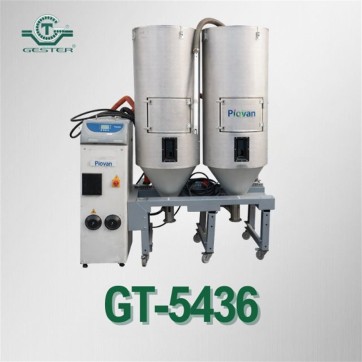
For companies requiring larger drying configurations, Gester offers equipment such as the PIOVAN DP 615 two-hopper dehumidifier, featuring two 225-litre hoppers and 14 kW of installed power.
Plastic Materials That Require Drying Before Processing
Different thermoplastic materials have specific moisture requirements. Selecting the appropriate resin drying equipment is important to ensure that the material reaches suitable processing conditions.
Plastic drying systems are commonly used with the following materials:
- Polyethylene Terephthalate (PET): A hygroscopic polymer that requires controlled drying to limit moisture-related degradation during processing.
- Polyamide (PA or Nylon): Absorbs moisture from the surrounding environment and generally requires drying before melt processing.
- Polycarbonate (PC): Requires moisture control to reduce the risk of degradation and defects during processing.
- Acrylonitrile Butadiene Styrene (ABS): Depending on the grade and storage conditions, drying may be required to prevent processing defects.
- Thermoplastic Polyurethane (TPU): Moisture-sensitive grades generally require suitable drying conditions before extrusion or injection moulding.
- Polymethyl Methacrylate (PMMA): Often requires drying to achieve consistent processing conditions and product quality.
- Polybutylene Terephthalate (PBT): Requires appropriate moisture control to reduce hydrolytic degradation during processing.
Other polymers, including polyethylene and polypropylene, may require surface moisture removal under certain storage or processing conditions, although they are generally considered non-hygroscopic.
Drying temperature, residence time and required moisture content should always follow the recommendations of the material manufacturer and the specifications of the selected equipment.
Key Benefits of Using Plastic Resin Dryers
Investing in suitable drying equipment for plastics can improve production consistency, reduce processing problems and support efficient material preparation.
- Improved Product Quality: Correct moisture control helps reduce defects such as bubbles, surface imperfections and material degradation.
- Consistent Processing Conditions: Controlled drying supports more stable material preparation before extrusion and injection moulding.
- Reduced Production Waste: Minimising moisture-related defects can help decrease rejected products and unnecessary material losses.
- Better Material Handling: Drying hoppers and conveying systems can help maintain a continuous supply of prepared plastic resin.
- Versatile Applications: Different dryer configurations can be used for thermoplastics, engineering polymers and recycled materials.
- Improved Production Efficiency: Proper material preparation can reduce interruptions associated with inadequate drying.
- Cost-Effective Investment: Second-hand plastic dryers provide an alternative to new industrial equipment, helping businesses control acquisition costs.
Plastic Drying Systems for Extrusion and Injection Moulding
Plastic drying systems are widely used in industrial processes where material moisture can affect product quality and production stability.
Plastic Dryers for Injection Moulding
In injection moulding, plastic pellets are heated and injected into a mould to produce finished components. Moisture-sensitive materials must be properly dried before entering the injection unit to reduce the risk of degradation and visible defects.
Depending on the installation, a plastic resin dryer can operate alongside a drying hopper and an automatic material loading system, helping maintain a continuous supply of prepared material.
Resin Dryers for Plastic Extrusion
Extrusion processes require stable material conditions to produce consistent plastic profiles, sheets, films and other products. For hygroscopic polymers, excess moisture can affect melt quality and the properties of the extruded material.
Industrial dryers can be integrated into extrusion lines to prepare plastic pellets before they enter the extruder. The appropriate system depends on the material characteristics, production capacity and processing temperature.
At Gester, we also offer single-screw extruders for companies looking to expand or upgrade their plastic processing installations.
Drying Equipment for Plastic Recycling
Plastic recycling operations may require different drying stages depending on the origin and condition of the recovered material.
After washing, plastic flakes often contain surface moisture that must be removed using suitable mechanical or thermal drying equipment. Hygroscopic recycled polymers may also require additional dehumidifying before extrusion or pellet production.
Correct material preparation is important to maintain consistent processing conditions and obtain reusable material of the required quality.
Companies operating recycling facilities can also explore our range of plastic pelletizing machinery for complementary material processing applications.
How to Choose the Right Plastic Resin Dryer
Choosing a suitable plastic resin dryer requires evaluating the characteristics of the material, the expected production capacity and the drying conditions required by the manufacturing process.
Before purchasing second-hand drying equipment, several technical factors should be considered:
- Plastic Material: Identify the polymer and determine whether it requires hot-air drying or controlled dehumidification.
- Required Production Capacity: Select equipment capable of supplying the necessary material throughput, normally expressed in kilograms per hour.
- Hopper Capacity: Ensure that the drying hopper provides sufficient residence time for the material under the required operating conditions.
- Drying Temperature: Verify that the dryer can maintain the temperature specified for the polymer without causing material degradation.
- Dew Point Control: For hygroscopic materials, assess whether the dehumidifying system can provide sufficiently dry process air.
- Airflow: Check that the equipment provides appropriate airflow to distribute heat and remove moisture effectively.
- Energy Consumption: Compare installed power and expected operating requirements to identify an efficient configuration.
- Electrical Compatibility: Verify voltage, frequency and electrical connection requirements before installation.
- Available Space: Consider the dimensions of the dryer, drying hopper and any associated conveying equipment.
- Machine Condition: Review technical specifications, available components and maintenance requirements before purchasing used machinery.
At Gester, we understand that every production facility has specific requirements. Our team provides personalised advice to help businesses evaluate available plastic material dryers and identify equipment suited to their industrial processes.
Second-Hand Plastic Resin Dryers for Sale at Gester
Choosing second-hand plastic resin dryers is a practical solution for companies looking to improve their drying capacity without making the higher initial investment associated with new industrial machinery.
At Gester, we specialise in supplying used equipment for plastic processing, extrusion and recycling. Our catalogue includes dehumidifying dryers, material dryers and drying systems from different industrial manufacturers.
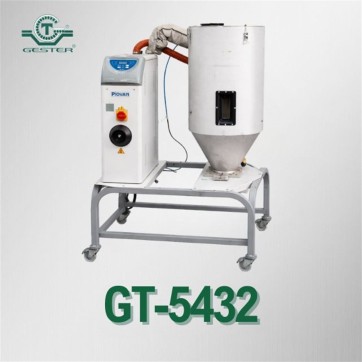
Among the listed equipment, companies can find machines such as the PIOVAN DPM609 dehumidifier, featuring a 180-litre silo and 7 kW of installed power.
Our available equipment includes different capacities, power ratings and configurations, allowing companies to compare alternatives according to their material requirements and production conditions.
Before purchasing, it is important to review the specifications and operating condition of each machine to confirm its compatibility with the intended application.
We provide technical information and personalised guidance to help companies identify suitable drying solutions and make informed investment decisions.
Find the Right Plastic Drying Equipment for Your Production Line
Whether you are looking for plastic resin dryers, resin hoppers or complete plastic drying systems, Gester can help you find industrial equipment adapted to your production requirements.
Our team can provide information about available machinery, technical characteristics, dimensions, power requirements and current prices.
For companies planning to upgrade several stages of their manufacturing process, we also recommend exploring our selection of conveying and storage machinery and industrial cooling equipment.
Explore our catalogue of plastic drying and dehumidification equipment and contact Gester to request additional information or a personalised quotation. Our aim is to help your business improve material preparation, optimise production efficiency and make the most of its machinery investment.
Frequently Asked Questions
 Recycling and pelletizing
9 types
 Extrusion
8 types
 Mixing equipment
2 types
 Conveying and storage
8 types
 Drying and cooling
2 types
 Cutting, pressing and packaging
4 types
 Plastic processing machinery
3 types
 Electromechanical equipment
7 types
 Miscellaneous machinery
11 types