 Recycling and pelletizing
9 types
Recycling and pelletizing
9 types
 Extrusion
8 types
Extrusion
8 types
 Mixing equipment
2 types
Mixing equipment
2 types
 Conveying and storage
8 types
Conveying and storage
8 types
 Drying and cooling
2 types
Drying and cooling
2 types
 Cutting, pressing and packaging
4 types
Cutting, pressing and packaging
4 types
 Plastic processing machinery
3 types
Plastic processing machinery
3 types
 Electromechanical equipment
7 types
Electromechanical equipment
7 types
 Miscellaneous machinery
11 types
Miscellaneous machinery
11 types
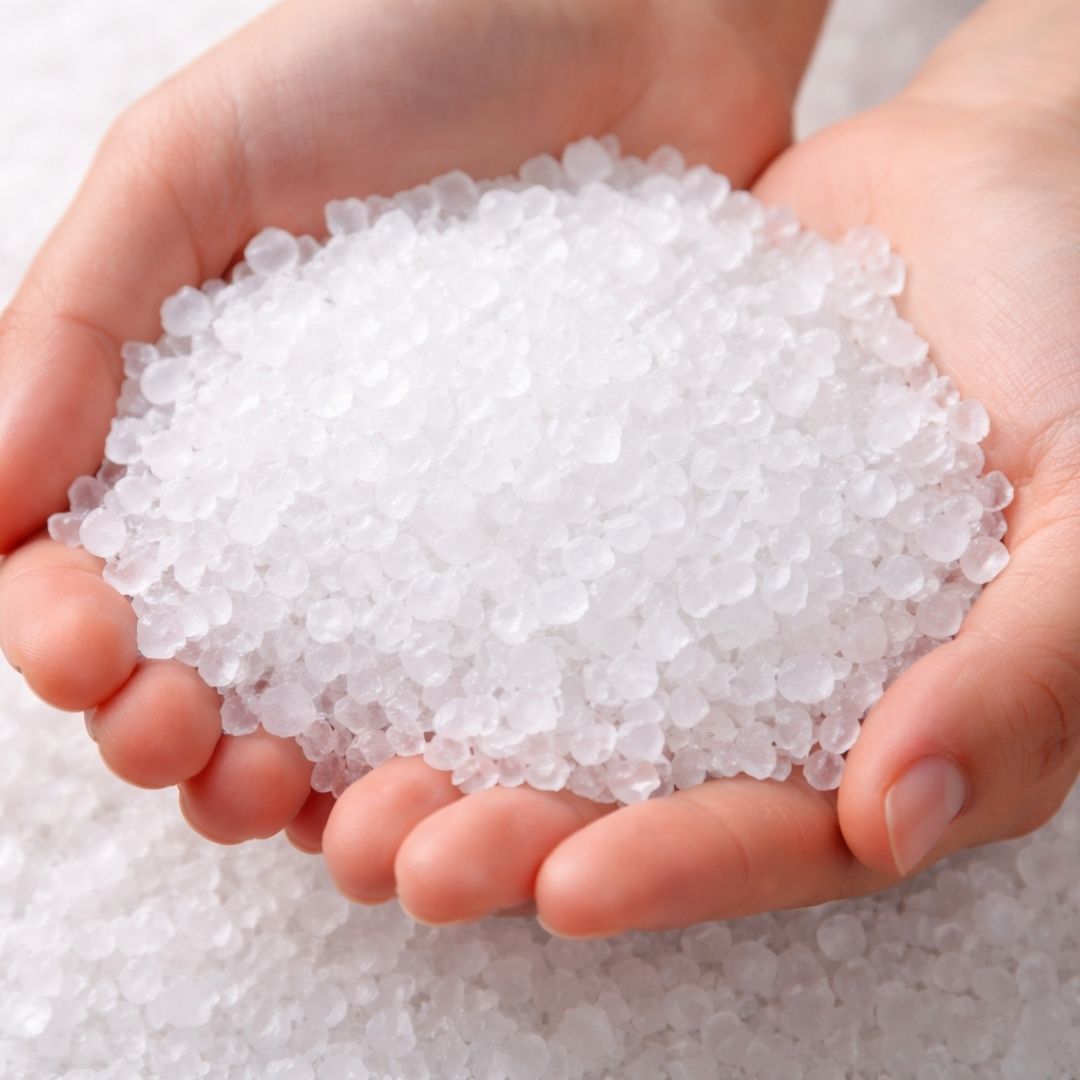 What Is LDPE and Why Is It So Widely Used in Industry?
LDPE (Low-Density Polyethylene) is one of the most widely used materials in the packaging and plastics processing industries, even though it often goes unnoticed in everyday industrial operations. It is commonly found in films, bags, sheets, protective coverings, industrial packaging, and many flexible applications where lightweight performance and adaptability are essential.
Its value does not depend on a single characteristic, but rather on a highly balanced combination of properties: easy processability, excellent sealing capability, high flexibility, and stable industrial performance. This balance is precisely what makes LDPE particularly suitable for large-scale continuous production environments.
LDPE is also one of the most common polymers used in plastic recycling streams, which places it directly within the broader industrial challenges of thermoplastic polymer recycling in modern manufacturing environments.
A Molecular Structure That Explains Its Flexibility
The flexibility of LDPE comes from its branched molecular structure, which reduces crystallinity. In practical terms, this creates a softer material capable of deforming without breaking easily, while still maintaining stable extrusion performance.
A Material Designed for Continuous Production
In industrial environments, LDPE is appreciated for its process consistency. It allows the production of films and thin parts under stable operating conditions, facilitating continuous and repetitive manufacturing lines.
Main Properties of LDPE
Flexibility and Impact Resistance
LDPE stands out because of its ability to absorb deformation without immediate rupture. It is ideal for applications where flexibility is more important than rigidity, such as films or plastic bags.
Density and Melt Flow Index
Density directly influences rigidity, transparency, and the mechanical behavior of the material. The Melt Flow Index (MFI) plays a major role in extrusion behavior and overall process stability.
Thermal Behavior
LDPE has a relatively broad melting range, which simplifies processing operations. However, precise temperature control remains essential to avoid degradation, gels, or production defects.
Chemical Resistance and Compatibility
Good Resistance to Common Industrial Environments
LDPE performs well against moisture, aqueous solutions, and many mild chemical products. This is one of the main reasons why it is so widely used in flexible packaging applications.
Material Limitations
Certain solvents, hydrocarbons, or combinations of high temperatures and mechanical stress may affect its performance. Material selection must therefore always match the real operating conditions of the final application.
Main Applications of LDPE
Flexible Packaging
LDPE is extensively used for plastic bags, stretch films, protective films, and industrial packaging solutions. Its flexibility and excellent sealing properties make it a standard material in this field.
Technical Applications
It is also used in coatings, flexible parts, and cushioning elements where controlled deformation provides a functional advantage.
Tubes and Piping Applications
In applications with relatively low mechanical or thermal requirements, LDPE may be used for tubes or conduits depending on pressure conditions and operational constraints.
LDPE in Films and Bags
A Key Material for Film Extrusion
LDPE is particularly suitable for film extrusion thanks to its stable processing behavior and sealing performance. It enables continuous production with strong industrial efficiency.
Blends with LLDPE
In many applications, LDPE is combined with LLDPE (Linear Low-Density Polyethylene) to improve tear resistance while maintaining flexibility and processability.
Common Production Problems
The most common defects include thickness variations, gels, sealing problems, or loss of transparency. These issues are often related to raw material quality or processing parameters.
The LDPE Recycling Code “4”
What Does the Recycling Symbol 4 Mean?
The recycling code “4” generally corresponds to LDPE. It is frequently found on plastic bags, packaging films, and certain flexible plastic products.
Useful Identification, but with Limitations
This marking does not guarantee that the material is clean or easy to recycle. Additives, inks, adhesives, and multilayer structures may significantly complicate industrial recycling processes.
LDPE Recycling: Industrial Reality
Post-Industrial vs Post-Consumer LDPE
Post-industrial LDPE is generally easier to recycle because it is cleaner and more homogeneous. Post-consumer LDPE is more variable and requires more advanced processing stages.
Factors That Degrade Material Quality
The main causes of degradation include contamination, moisture, incompatible polymer mixtures, and thermal degradation.
Applications of Recycled LDPE
Recycled LDPE is often used in less demanding applications or blended with virgin material to balance mechanical and economic performance.
LDPE recycling is part of a broader industrial plastic recycling process that combines sorting, washing, drying, extrusion, and quality control to obtain stable secondary raw materials.
Comparison Between LDPE, HDPE, and LLDPE
LDPE vs HDPE
LDPE is more flexible and particularly suitable for films, while HDPE is more rigid and commonly used for structural applications or technical containers.
This difference explains why recycled HDPE industrial applications are more commonly associated with drums, crates, pipes, or technical parts requiring higher mechanical resistance.
The Role of LLDPE
LLDPE improves mechanical resistance, especially tear resistance, and is often combined with LDPE in technical films and industrial packaging applications.
Industrial Processing of LDPE
Main Processing Methods
LDPE is mainly processed through blown film extrusion, cast film extrusion, thermoforming, and other shaping technologies depending on the final application.
Critical Process Parameters
Temperature, feeding stability, cooling, pressure, and filtration are essential to guarantee stable production and minimize manufacturing defects.
Recycling and Industrial Preparation
Essential Recycling Stages
Recycling generally includes grinding, washing, drying, filtration, and pelletizing operations.
During the final stage, pelletizing equipment for recycled LDPE transforms plastic waste into homogeneous pellets that are easier to store, transport, and reuse in production lines.
Importance of Input Material Quality
Final material quality depends heavily on incoming waste quality. Proper separation, efficient cleaning, and stable material flow management are essential to obtaining industrially usable recycled material.
LDPE, Sustainability, and Product Life Cycle
LDPE is often criticized because of its presence in single-use packaging, but its real industrial performance depends largely on how it is collected, sorted, and recovered after use.
Understanding the plastic life cycle and recyclability makes it possible to evaluate the real environmental impact of the material more accurately, from production to its potential reintegration into a new industrial cycle.
How to Choose the Right LDPE
Defining the Product Objective
The selection of LDPE depends on the targeted objective: flexibility, transparency, mechanical resistance, sealability, or cost optimization. Each application requires a different balance between these properties.
Avoiding Common Mistakes
Changing grades without prior analysis or introducing recycled material without process adjustments may generate production defects, lower quality, or process instability.
An Industrial Approach
LDPE should be considered as a complete system involving the material itself, the processing method, material quality, and the final application. This global approach is what guarantees long-term industrial stability and performance.