
 Recycling and pelletizing
9 types
Recycling and pelletizing
9 types
 Extrusion
8 types
Extrusion
8 types
 Mixing equipment
2 types
Mixing equipment
2 types
 Conveying and storage
8 types
Conveying and storage
8 types
 Drying and cooling
2 types
Drying and cooling
2 types
 Cutting, pressing and packaging
4 types
Cutting, pressing and packaging
4 types
 Plastic processing machinery
3 types
Plastic processing machinery
3 types
 Electromechanical equipment
7 types
Electromechanical equipment
7 types
 Miscellaneous machinery
11 types
Miscellaneous machinery
11 types
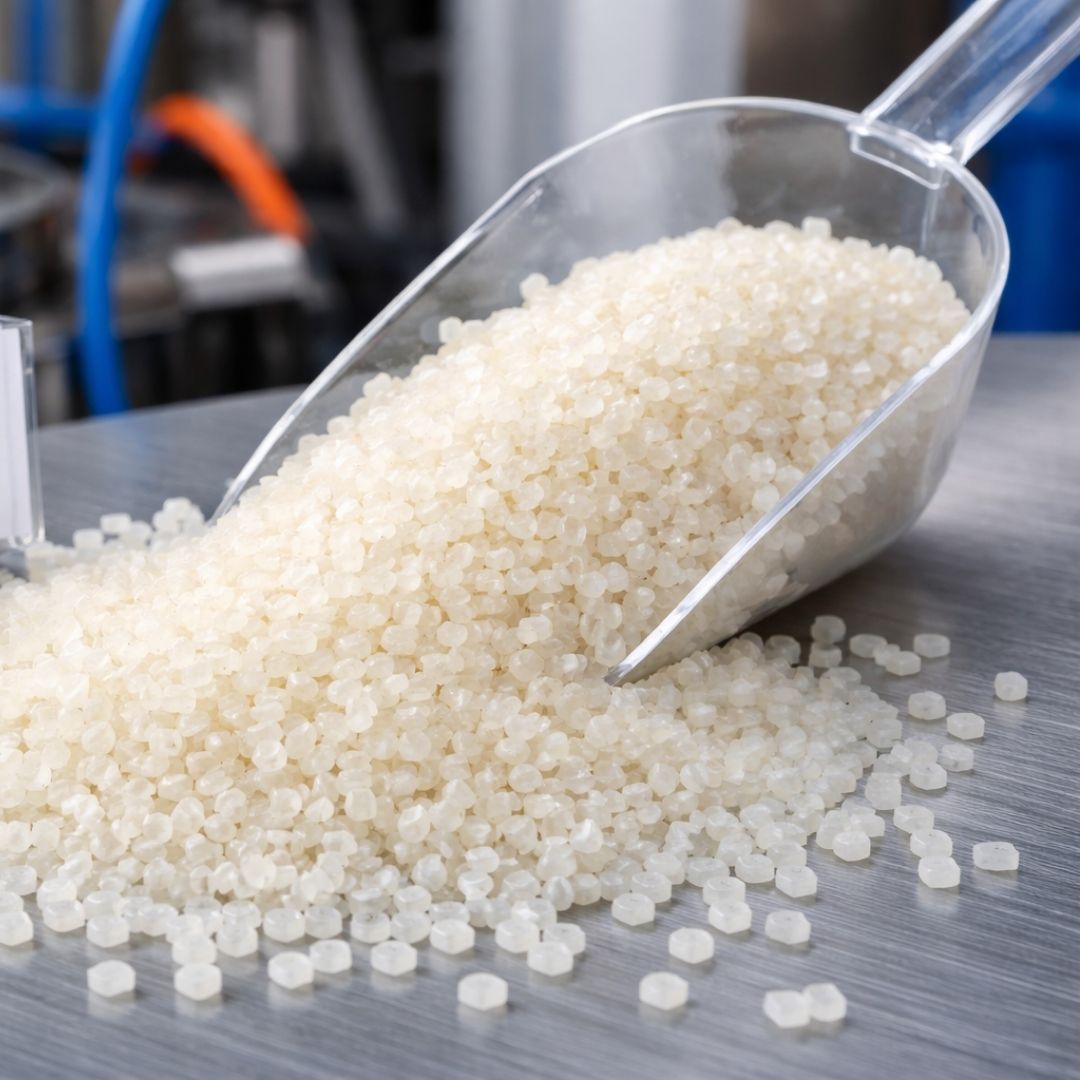
Polyamide as an engineering thermoplastic
In industrial manufacturing, polyamide (PA) is not treated as a “generic plastic”, but as an engineering thermoplastic used when parts must resist mechanical loads, abrasion, temperature cycles and real-world production conditions. It appears in applications where materials are expected to behave consistently under repetitive stress, friction, vibration, and exposure to oils, greases or humidity, while remaining cost-effective and scalable.
From a production perspective, polyamide is valuable because it sits in a practical middle ground: it can reach strong mechanical performance without the cost and complexity of ultra-high-performance polymers, and it is widely available in industrial grades that are well understood by processors, molders and maintenance teams. In short: polyamide is a workhorse material. You’ll see it in gears, bushings, housings, cable protection systems, industrial fittings, wear strips and structural parts, and it is especially common wherever low friction and wear resistance are central to uptime.
Polyamide in industrial materials engineering
In materials engineering terms, polyamide refers to a family of polymers containing amide groups in the backbone. That chemistry influences how chains interact with each other, which in turn defines key properties such as toughness, strength, fatigue resistance and thermal performance. Industrially, PA is selected when designers need a thermoplastic that can be molded, extruded, machined, and still provide a stable performance profile across typical factory environments.
Unlike commodity plastics, polyamide is frequently specified with attention to grade, reinforcement, conditioning, and processing window. The reason is simple: the same “PA” can behave very differently depending on chain length, crystallinity, additives, fillers, glass fiber content, and moisture state. Good engineering decisions treat polyamide as a material system, not a label.
Why polyamide is widely used in industrial applications
Polyamide earns its place through a combination of practical advantages: excellent mechanical strength for a thermoplastic, strong wear resistance, good impact behavior in many grades, and the ability to maintain performance under continuous motion. In operations, that translates to components that last longer, reduce lubrication demands, and tolerate minor misalignments without immediate failure. For maintenance teams, PA parts often mean fewer emergency stops caused by wear or brittle cracking.
Another reason is that polyamide supports industrial scalability. It processes well in high-volume methods such as injection molding and extrusion, but it can also be used for low-volume custom components through machining or specialized manufacturing routes. That makes it useful both for OEM production and for replacing parts in older equipment where the original supply chain is limited.
Polyamide within the family of thermoplastic polymers
Polyamide belongs to the family of thermoplastics, meaning it can be melted and reprocessed, which is relevant for production efficiency, scrap recovery and recycling pathways. However, it is not identical to “standard plastics”; it behaves more like a technical polymer with performance closer to engineering requirements. When comparing material families, PA is often evaluated alongside polymers like POM, PET, PBT, PP, and higher-end options such as PEEK—depending on the expected duty cycle, temperature limits and chemical exposure.
In industrial decision-making, the key is not to ask whether polyamide is “good”, but whether its specific grade and formulation aligns with the application constraints: load, speed, temperature, humidity, tolerances, vibration and service environment.
Chemical structure and material fundamentals
Understanding polyamide at a structural level helps explain why it behaves the way it does in real applications. The amide groups in the backbone create strong intermolecular interactions, which contributes to strength and toughness, but also explains why polyamide can absorb moisture and change dimensions if not accounted for. That is not a “problem” by default; it is simply a characteristic that engineers must manage with proper design, conditioning and material selection.
Polyamide molecular structure
Polyamides are polymers whose chains contain repeating units linked through amide bonds (–CONH–). These bonds allow hydrogen bonding between chains, increasing cohesion. The result is a polymer family that can deliver high tensile strength and good fatigue behavior, while remaining processable through standard thermoplastic techniques.
Industrial polyamides come in multiple types, typically identified by numbers such as PA6, PA66, PA12, PA11. These numbers reflect the structure of monomers used to build the polymer and influence chain packing, crystallinity and moisture behavior.
Amide bonds and polymer chain behavior
The amide bond is polar, enabling chain-to-chain interaction. This is part of why polyamide can perform well under load and friction, but it is also connected to its affinity for water molecules. Moisture can act as a plasticizer: it can reduce stiffness while increasing toughness in certain cases. This is a major reason why industrial polyamide specifications may mention conditioning state, because performance can shift between “dry-as-molded” and “conditioned” states.
Crystallinity and its influence on performance
Most industrial polyamides are semi-crystalline. Crystalline regions provide strength and chemical resistance, while amorphous regions contribute to toughness and impact performance. Crystallinity is influenced by polymer type, cooling rate during processing, part thickness and additives. In practice, this means that processing conditions can materially affect performance, and that two parts molded from the same resin can behave differently if the process is not controlled.
Main properties of polyamide materials
Polyamide is defined in industry by its property profile, not by its name. Engineers select PA because it can offer a reliable balance of strength, wear resistance and thermal capability, with available options for reinforcement and modification. The most important point is that polyamide is not a single material: properties depend heavily on grade, moisture content, reinforcement and processing.
Mechanical strength and wear resistance
Polyamide is often chosen for components under mechanical stress because it can offer strong tensile performance and good resistance to repeated loading. Its wear resistance makes it suitable for parts that operate in contact with other surfaces, particularly where friction is present and lubrication is limited. That is why polyamide shows up in guides, sliders, rollers, protective components, bushings and gear systems.
Wear behavior is not only “material vs material”; it depends on surface finish, contact pressure, speed, lubrication, temperature and debris. Industrial best practice is to validate polyamide wear performance under realistic conditions rather than relying purely on generic data sheets.
Thermal behavior and heat resistance
Polyamide typically performs better at elevated temperatures than many commodity plastics. However, temperature limits vary significantly between PA types. For example, PA66 is often used when higher thermal stability is required, while PA12 may be chosen for its dimensional stability and low moisture uptake rather than maximum heat resistance. In continuous operation, the key question is the sustained service temperature, not a short peak.
Density and weight-performance ratio
Polyamide provides a favorable strength-to-weight ratio, which matters when designing moving assemblies or when replacing metal parts where weight reduction helps energy efficiency. While polyamide does not replace metals in all load cases, it can reduce inertia and noise in dynamic systems, contributing to smoother operation and lower energy demand.
Impact resistance and fatigue behavior
Many polyamide grades provide good impact behavior, especially when properly conditioned. Fatigue resistance is one of the reasons PA is used in repetitive motion systems. For components exposed to constant vibration or cyclical stresses, polyamide may outperform brittle alternatives. Still, the design must consider long-term creep under load, particularly at elevated temperatures.
Chemical resistance and environmental stability
Polyamide shows good resistance to many oils, greases and fuels, which makes it relevant in industrial machinery environments. However, chemical compatibility is application-specific. Exposure to strong acids, certain solvents, or aggressive environments can reduce performance. For industrial selection, chemical resistance must be validated with the exact chemicals present, their concentration, temperature and exposure time.
Moisture absorption and dimensional stability
One of the most important industrial realities is that polyamide can absorb moisture from the environment. This can affect dimensions, stiffness and mechanical response. This does not automatically disqualify polyamide; it simply requires correct engineering: define tolerances with conditioning in mind, choose PA types with lower moisture uptake when needed, and apply appropriate conditioning protocols if dimensional stability is critical.
Types of polyamide used in industry
Industrial polyamide selection usually starts with the main families used in engineering: PA6, PA66, PA12 and PA11. Each offers a different balance between strength, heat resistance, moisture behavior, dimensional stability and cost. Beyond these, aromatic polyamides exist for higher-performance needs, but they are less common in standard industrial production due to cost and processing complexity.
Polyamide 6 (PA6)
PA6 is widely used due to its good mechanical performance, broad availability and favorable processing behavior. It is common in industrial components requiring toughness and wear resistance. Depending on additives and reinforcement, PA6 can serve in housings, structural parts and many moving components.
Typical decision drivers include: balanced performance, accessible cost, and availability of reinforced grades (e.g., glass-fiber reinforced PA6) when higher stiffness is required.
Polyamide 66 (PA66)
PA66 is frequently chosen when higher thermal capability and mechanical stability are required compared to PA6. Its structure generally supports higher crystallinity and thermal resistance, which can be valuable in parts exposed to temperature cycles and mechanical loads. PA66 is widely used in automotive and industrial components, particularly where dimensional stability under heat is important.
Polyamide 12 (PA12)
PA12 is often selected for its lower moisture absorption and improved dimensional stability compared to PA6/PA66. That makes it attractive for precision parts and systems where tight tolerances must be maintained in varying humidity conditions. PA12 is also common in tubing and flexible components in industrial systems, where stability and chemical resistance are important.
Polyamide 11
PA11 is notable because it is often associated with bio-based feedstock. In industrial contexts, PA11 can be chosen when a balance is needed between performance, flexibility and sustainability goals. Its use depends on supply, cost and specific technical requirements, but it is increasingly considered in applications where environmental footprint is a strategic factor.
Aromatic polyamides
Aromatic polyamides belong to higher-performance categories and are used in demanding applications requiring elevated thermal resistance and structural stability. They are not typically the first choice for standard industrial components due to processing requirements and cost, but they exist as part of the broader polyamide family for specialized needs.
Polyamide 6 vs Polyamide 66
Comparing PA6 vs PA66 is common because these are two of the most widely used engineering polyamides. The correct choice depends on operating temperature, mechanical load, moisture conditions, dimensional tolerances and cost targets. Neither is universally better; each aligns with certain constraints.
Mechanical performance comparison
Both PA6 and PA66 offer strong mechanical performance, especially in reinforced grades. In many real applications, the difference becomes relevant when loads are high and tolerances are tight. PA66 often provides higher stiffness and better retention of properties at elevated temperatures, while PA6 can offer strong toughness and good processing behavior.
Thermal resistance differences
PA66 is frequently specified when the application sees higher continuous temperatures or frequent thermal cycling. The higher thermal capability can reduce long-term deformation risk under load. However, if the thermal requirement is moderate and other factors dominate, PA6 may be sufficient and more cost-effective.
Machining and processing considerations
Both materials can be processed and machined, but tooling, shrinkage behavior and conditioning must be considered. Processing stability matters because crystallinity and shrinkage affect final dimensions. In production environments, the “best” polymer is often the one that remains stable in process and delivers consistent parts at volume.
Which one to choose depending on application
If the application demands higher thermal stability and stiffness retention, PA66 is often evaluated early. If the application benefits from balanced toughness and cost efficiency, PA6 remains a strong candidate. When humidity-driven dimensional changes are critical, both may be less ideal than PA12, depending on the tolerance requirements.
Polyamide vs other technical plastics
Polyamide is usually selected after comparing it with other engineering thermoplastics. The goal is not to “rank” plastics, but to match material behavior with the duty cycle: load, friction, speed, temperature, chemicals, tolerances and lifecycle cost.
Polyamide vs nylon: technical clarification
In many industrial contexts, nylon is essentially a common name for certain polyamides, especially PA6 and PA66. The term “nylon” is often used commercially and colloquially, while “polyamide” is used more formally in technical documentation. The important point is to focus on the exact grade (PA6, PA66, etc.) rather than the label.
Polyamide vs polyester in industrial environments
Polyester (in engineering plastics such as PET or PBT) can offer excellent dimensional stability and good chemical resistance, particularly in certain environments. Polyamide may outperform in toughness and wear in many cases, but polyester can be preferable when moisture absorption must be minimized. The correct selection depends on the environment and the failure modes you are trying to avoid.
Polyimide vs polyamide
Polyimides are typically higher-performance polymers designed for extreme heat and demanding conditions, often at significantly higher cost. Polyamide is used when the performance requirement can be met with engineering thermoplastics at industrial cost levels. If the application truly demands extreme thermal and structural stability, polyimides may be considered, but most industrial machinery components operate within ranges where polyamide is a practical solution.
When polyamide is the preferred solution
Polyamide is preferred when the application requires wear resistance, mechanical strength, toughness and a cost-effective route to production. It is also common when friction and repetitive motion matter, and when a material must resist oils and greases typically found in industrial environments.
Polyamide processing methods
Polyamide is industrially attractive because it supports multiple processing routes. However, processing has a direct impact on final properties. A robust manufacturing setup defines not only resin choice but also process parameters that stabilize crystallinity, shrinkage and surface quality.
Injection molding of polyamide
Injection molding is one of the most common methods for producing polyamide components at scale. It supports complex geometries and high repeatability, particularly with controlled drying, temperature management and mold design. Moisture control before molding is essential: polyamide can absorb water, and excessive moisture can cause defects and reduce part quality.
Extrusion processes
Extrusion is widely used for producing polyamide profiles, tubes and semi-finished products that can later be machined. This route is useful for industrial components where standard shapes are sufficient or where machining is preferred for precision and flexibility. In some industrial systems, polyamide tubing is valued for stability and chemical resistance, especially when the correct PA type is selected.
Machining and post-processing
Machining polyamide is common for custom components, replacements and low-volume industrial parts. It enables rapid turnaround, but designers must consider moisture conditioning and thermal expansion. Post-processing may include annealing or conditioning depending on dimensional requirements.
Influence of processing on final properties
Cooling rate, part thickness, mold temperature, reinforcement orientation and moisture state can all change the final property profile. That is why industrial best practice includes validation with actual production parts and service conditions, not only resin data sheets. For critical applications, process capability is as important as material choice.
Industrial applications of polyamide
The industrial relevance of polyamide becomes obvious when you map it to common failure modes in machinery: wear, friction, vibration-driven fatigue, impact, and temperature-driven deformation. Polyamide is used where it can reduce wear, extend service life and improve operational stability. The application range is broad, but the logic remains consistent: polyamide is used to solve mechanical problems in a scalable way.
Mechanical components and moving parts
Polyamide appears in a wide range of moving components where friction and wear matter. It is used to manufacture parts like guides, sliders, rollers, protective covers and structural components that experience constant contact. In many systems, polyamide helps reduce noise and supports smoother movement compared to metallic contact pairs.
Gears, bushings and wear elements
Gears and bushings made from polyamide can provide good performance in applications where lubrication is limited and where vibration and noise reduction are beneficial. Wear elements such as pads and strips can be produced in polyamide to protect more expensive surfaces and simplify maintenance. Here, the success of polyamide depends on correct grade selection and realistic design loads.
Automotive and transport industry
Automotive systems use polyamide in many under-the-hood and structural applications, especially when thermal stability, mechanical strength and chemical resistance are required. The industrial logic is similar outside automotive: polyamide reduces weight, supports complex geometry production, and can integrate functional features into molded parts.
Electrical and electronic components
Polyamide is used in electrical housings and component carriers where mechanical stability and production efficiency matter. Specific grades are chosen for flame resistance and electrical behavior depending on the application. Industrial selection must follow relevant standards and validation requirements.
Industrial housings and structural parts
Housings and structural components made from reinforced polyamide can replace metal in many systems where loads are moderate and where design flexibility is valuable. Polyamide enables integrated ribs, clips, ducts and attachment points that can simplify assembly and reduce part counts.
Polyamide in recycling and sustainability
As industrial supply chains evolve, recycled polyamide becomes more relevant. The challenge is to balance performance requirements with variability in feedstock. In many industrial contexts, recycled polyamide can be used successfully, but it requires sorting, process control and consistent quality assurance.
Recycled polyamide in industrial use
Recycled polyamide can be applied in industrial parts when the grade and quality are suitable for the duty cycle. Applications often focus on non-critical components or parts where performance margins are sufficient. With proper compounding and quality controls, recycled materials can also serve in more demanding roles, depending on the supply chain and certification requirements.
Mechanical recycling considerations
Mechanical recycling introduces potential variability: degradation through repeated heat history, contamination, and changes in molecular weight distribution. Industrial processes that rely on recycled polyamide must define acceptance criteria and test methods that reflect real service requirements.
Performance of recycled vs virgin polyamide
Virgin polyamide offers a more controlled baseline, while recycled polyamide may vary batch to batch. However, performance differences depend on the recycling process and the final compound. Many industrial users build protocols around traceability, incoming inspection and controlled blending to stabilize outcomes.
Sustainability challenges and opportunities
Polyamide recycling can support sustainability goals, but it requires realistic engineering. The most effective approach is to define where recycled grades create value without increasing failure risk. Sustainability is strongest when it is tied to stable industrial performance, not when it compromises reliability.
Advantages and limitations of polyamide
Polyamide is widely used because its advantages match common industrial needs, but it also has limitations that must be addressed through design and material selection. Treating polyamide as a “drop-in material” without accounting for moisture behavior and thermal creep is one of the main causes of poor results.
Key advantages in industrial applications
Polyamide provides a strong combination of mechanical strength, wear resistance, toughness and processability. It supports industrial production methods and offers broad availability in multiple grades. Reinforced versions can reach high stiffness, enabling structural uses. For dynamic systems, polyamide can reduce noise and wear, improving equipment stability.
Limitations engineers must consider
The main limitation is moisture absorption, which can influence dimensions and stiffness. Creep under continuous load, especially at elevated temperatures, must also be considered in long-term designs. Chemical resistance is generally good in industrial oils and greases, but compatibility must be checked for specific solvents and aggressive chemicals.
Common design mistakes when using polyamide
Typical mistakes include ignoring conditioning state when setting tolerances, using the wrong grade for high-temperature continuous loads, assuming all polyamides behave the same, and failing to validate wear performance under real friction and load conditions. A correct approach defines the duty cycle and selects the PA grade accordingly.
Selecting the right polyamide for industrial use
Choosing polyamide is not about picking “PA” as a category; it is about selecting the correct family and grade based on operating conditions. A structured selection process reduces failures, improves consistency and makes maintenance predictable.
Load, temperature and environment criteria
Start with mechanical load and continuous temperature. Then consider the environment: humidity, oils, greases, dust, chemicals and UV exposure. If humidity-driven dimensional changes are critical, PA12 or alternative polymers may be evaluated. If temperature is high and loads are significant, PA66 or reinforced grades may be more appropriate.
Mechanical vs chemical requirements
Some applications are dominated by mechanical wear and fatigue; others by chemical exposure. The correct polyamide grade must satisfy the dominant stressors. If multiple stressors exist, the safest method is to validate parts through testing that reproduces real exposure conditions.
Cost-performance balance
The cheapest resin is rarely the lowest cost in operation. The correct cost analysis includes lifecycle: wear rate, failure risk, downtime, maintenance labor and replacement frequency. Polyamide often delivers value because it reduces wear and improves uptime, even when initial material cost is higher than commodity plastics.
Standard grades vs reinforced polyamides
Reinforced polyamides (often glass-fiber reinforced) provide higher stiffness and better mechanical retention under load, but they can change impact behavior and influence wear against mating surfaces. Reinforcement can also affect processing and anisotropy. Selecting reinforcement levels should follow the mechanical requirements and the expected motion/contact conditions.
Polyamide as a strategic material in industry
Polyamide remains strategically important because it solves a set of recurring industrial challenges: reliable mechanical performance, wear control, scalable production and functional part integration. It can reduce the complexity of assemblies, increase operational stability and support both high-volume manufacturing and practical replacement strategies in industrial equipment.
Why polyamide remains a key engineering plastic
Polyamide remains relevant because it fits the reality of industrial systems: components move, wear, heat up, and face variability. Polyamide provides a balance that is accessible and reliable. With correct grade selection and process control, it becomes a predictable engineering material rather than a “plastic part”.
Role in modern industrial production and automation
Automation pushes factories to reduce downtime and maintain consistent cycles. Polyamide supports that by providing durable wear elements, stable housings, functional guides and mechanically robust components that can be produced at scale. In systems where reliability is tied to repetitive motion and friction, polyamide is one of the materials that keeps equipment running smoothly over time.