
 Recycling and pelletizing
9 types
Recycling and pelletizing
9 types
 Extrusion
8 types
Extrusion
8 types
 Mixing equipment
2 types
Mixing equipment
2 types
 Conveying and storage
8 types
Conveying and storage
8 types
 Drying and cooling
2 types
Drying and cooling
2 types
 Cutting, pressing and packaging
4 types
Cutting, pressing and packaging
4 types
 Plastic processing machinery
3 types
Plastic processing machinery
3 types
 Electromechanical equipment
7 types
Electromechanical equipment
7 types
 Miscellaneous machinery
11 types
Miscellaneous machinery
11 types
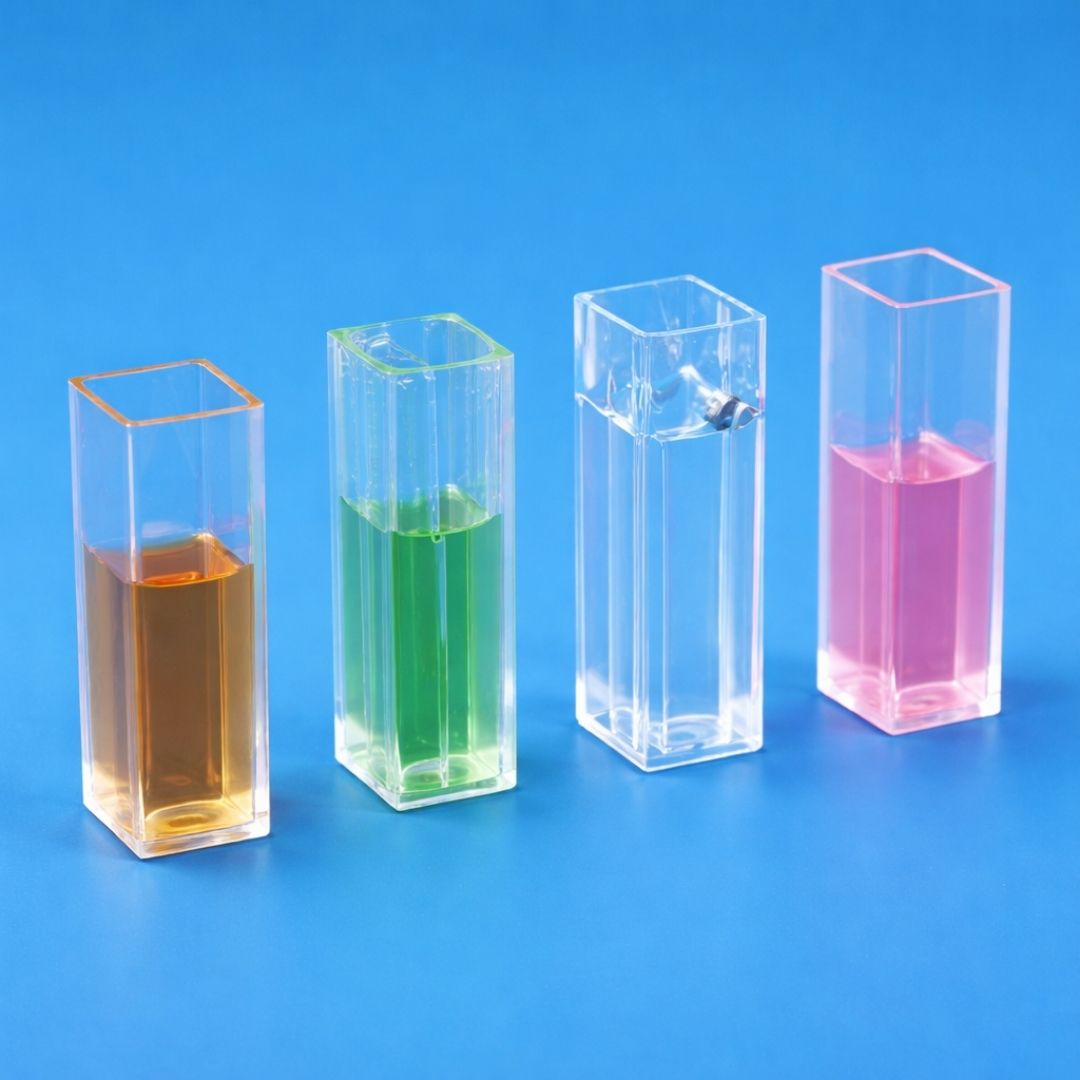 The Spectrophotometer: A Key Tool for Industrial Quality Control and Technical Laboratories
In industrial environments and technical laboratories, the spectrophotometer is far more than a simple measuring instrument. It is an essential piece of equipment used to guarantee stability, repeatability, and process control. When raw materials vary from one batch to another, or when finished products must meet strict tolerances, the spectrophotometer becomes a central tool within the quality control system.
It is commonly used in industries where variations are not always visible to the naked eye, such as plastics, polymers, masterbatch, paints, coatings, composites, and recycled materials. In these contexts, the use of laboratory equipment for plastic analysis makes it possible to transform visual perception into reliable, comparable, and actionable data.
What Does a Spectrophotometer Actually Measure?
A spectrophotometer analyzes how a material interacts with light at different wavelengths. It does not simply measure color visually, but instead evaluates a precise optical response: absorption, transmission, or reflection.
The collected data is then converted into measurable parameters used to compare samples, detect deviations, calculate concentrations, or validate formulations. This approach is especially useful for studying the optical properties of different types of plastics, particularly when transparency, shade consistency, or material homogeneity must remain stable.
A Measurement System Independent from Human Vision
One of the main advantages of the spectrophotometer is its independence from human visual perception and ambient lighting conditions. Thanks to a controlled light source, it provides objective and highly repeatable measurements.
The Role of the Spectrophotometer in Quality Control
In industry, the spectrophotometer is considered a reference tool for ensuring product consistency. It allows manufacturers to verify raw material conformity, monitor batch stability, and identify possible deviations in production processes.
In the plastics sector, it is also involved in polymer analysis in the plastics industry, where material composition, color consistency, and uniformity directly affect final product quality.
Reduction of Waste and Defects
Through early detection of variations, the spectrophotometer helps reduce scrap, customer complaints, and production downtime. Deviations can be identified before they become visible or economically costly defects.
Fundamental Principles of Spectrophotometry
Spectrophotometry is based on the interaction between light and matter. This interaction varies according to material composition, molecular structure, surface condition, and the wavelength being used.
- Absorbance: amount of light absorbed by the material.
- Transmittance: amount of light passing through the sample.
- Reflectance: amount of light reflected by the surface.
Each measurement mode requires strict operating conditions to ensure reliability and repeatability.
How a Spectrophotometer Works
The operation of a spectrophotometer relies on a precise measurement chain designed to generate reproducible results.
- Light generation.
- Wavelength selection.
- Interaction with the sample.
- Signal detection.
- Conversion into usable data.
- Software-based interpretation.
The Role of the Monochromator
The monochromator selects a precise wavelength band. This selection improves measurement accuracy and guarantees better reproducibility between analyses.
Importance of the Detector
The detector converts received light into an electrical signal. Its quality directly influences measurement sensitivity, stability, and reliability.
Main Components of a Spectrophotometer
- Light source.
- Monochromator.
- Sample compartment.
- Cuvettes.
- Detector.
- Electronic and software systems.
Cuvettes: A Critical Element
Cuvettes define the optical path and directly influence measurement quality. They must be clean, adapted to the spectral range used, and kept in perfect condition.
- Glass: used for visible spectrum measurements.
- Quartz: used for UV applications.
- Plastic: reserved for certain specific applications.
Types of Spectrophotometers
UV-Visible Spectrophotometer
Used for quantitative analysis, solution control, and applications involving dyes and pigments, it generally covers a wavelength range between 190 and 800 nm.
Infrared Spectrophotometer
This type of instrument is used to analyze the chemical structure of materials, identify certain polymers, or detect contamination.
Atomic Absorption Spectrophotometer
This equipment is designed to measure trace metallic elements with very high precision.
Industrial Applications
The spectrophotometer is used in numerous industrial environments, especially for production quality control, plastics and polymers, paints, coatings, recycled materials, and technical laboratory analysis.
Color Control in Plastics
In the plastics industry, the spectrophotometer is used to verify the color stability of raw materials, pellets, processed parts, and finished products. It therefore plays a key role in quality control during plastic manufacturing, where even small variations may generate visible differences between production batches.
Extrusion and Color Homogeneity
In continuous production processes, the spectrophotometer helps ensure that color remains stable throughout manufacturing. This function is especially important for color control in plastic extrusion, where material uniformity depends on many parameters such as formulation, temperature, pigment dispersion, and process consistency.
Management of Recycled Materials
In recycling operations, the spectrophotometer helps detect material variations, classify batches, and maintain stable quality despite the heterogeneity of incoming materials. This improves control over differences between multiple recycled material sources.
Differences Between Spectrophotometers and Other Instruments
Spectrophotometer vs Colorimeter
The colorimeter is suitable for rapid color checks, while the spectrophotometer provides a more precise and detailed analysis of a material’s optical behavior. It delivers more complete information about how the sample absorbs, transmits, or reflects light.
Spectrophotometer vs Spectrometer
The term spectrometer is broader and covers several spectrum analysis technologies. The spectrophotometer is specifically dedicated to analyzing transmitted, absorbed, or reflected light from a sample.
Best Practices and Maintenance
The reliability of a spectrophotometer depends as much on equipment quality as on strict adherence to measurement procedures. Poor sample preparation or insufficient calibration can distort results.
- Regular calibration.
- Standardized sample preparation.
- Cleaning of cuvettes.
- Verification using standards.
- Measurement traceability.
Common Errors
- Dirty or scratched cuvettes.
- Insufficient calibration.
- Incorrect sample preparation.
- Lack of standardized measurement methods.
- Poor traceability of results.
The Spectrophotometer as a Strategic Tool
In industry, the spectrophotometer is not limited to a measurement function. It becomes a strategic tool used to stabilize processes, reduce variations, improve overall quality, and support safer production decisions.
When integrated into a well-defined quality control system, it transforms optical data into reliable operational decisions, especially in sensitive industries such as plastics, polymers, textiles, coatings, and recycled materials.