 Recycling and pelletizing
9 types
Recycling and pelletizing
9 types
 Extrusion
8 types
Extrusion
8 types
 Mixing equipment
2 types
Mixing equipment
2 types
 Conveying and storage
8 types
Conveying and storage
8 types
 Drying and cooling
2 types
Drying and cooling
2 types
 Cutting, pressing and packaging
4 types
Cutting, pressing and packaging
4 types
 Plastic processing machinery
3 types
Plastic processing machinery
3 types
 Electromechanical equipment
7 types
Electromechanical equipment
7 types
 Miscellaneous machinery
11 types
Miscellaneous machinery
11 types
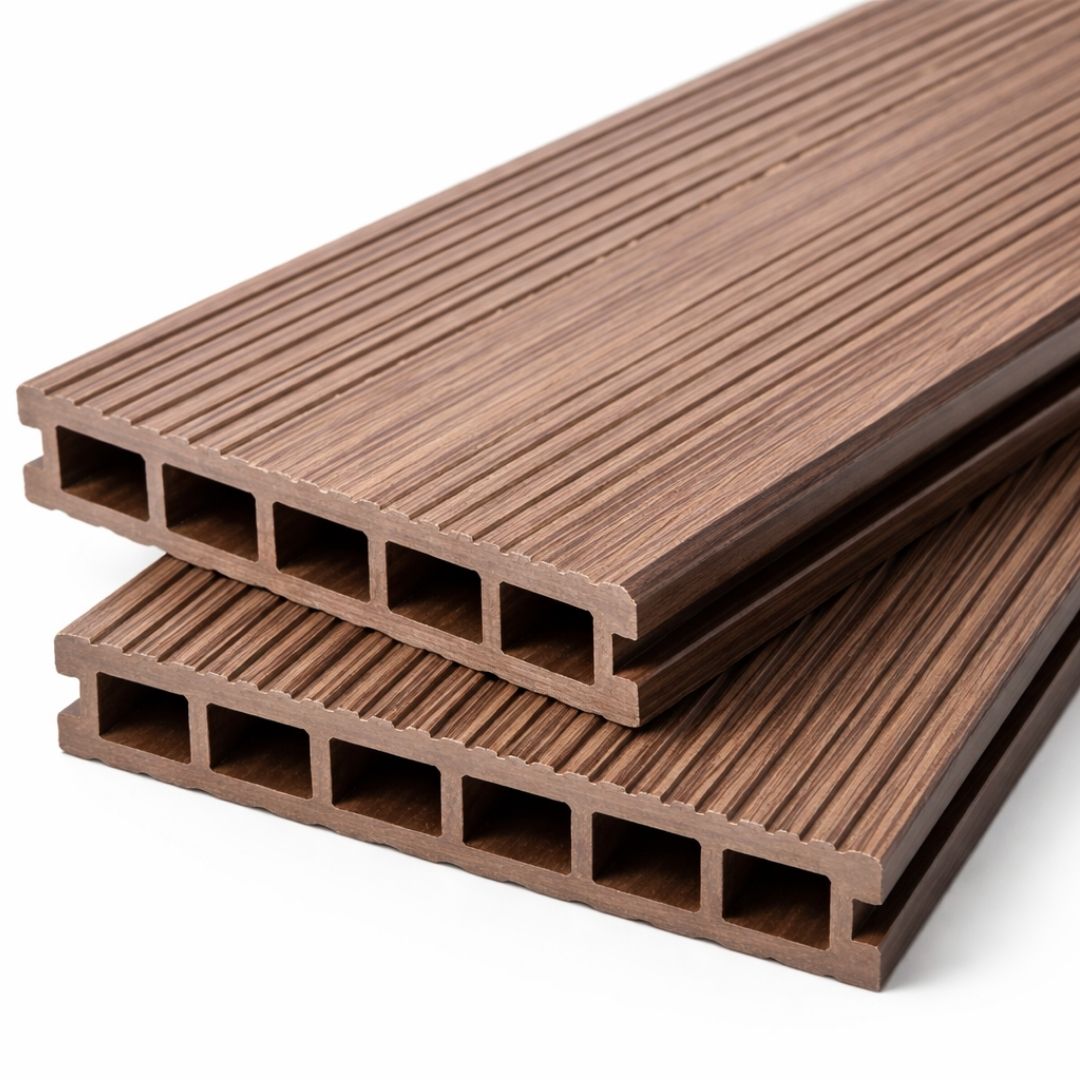 Wood Plastic Composite (WPC): Composite Material, Manufacturing, and Applications
Wood Plastic Composite (WPC) materials combining wood fibers and thermoplastic polymers have evolved from being an alternative solution to becoming a widely adopted option in numerous industrial and construction applications. Their growing popularity is based on their stability, repeatability, and strong performance in outdoor environments.
This hybrid material combines the rigidity and natural appearance of wood while reducing several of its traditional limitations, particularly sensitivity to moisture, dimensional variations, and degradation caused by thermal and humidity cycles.
In modern industrial formulations, the polymer used is not always virgin material. Many production lines integrate recycled plastics, including recycled PVC, which makes control of traceability, formulation consistency, and thermal behavior essential. This approach is part of a broader strategy of polymer recycling in composite materials, where the quality of incoming raw material directly influences the stability of the final product.
The interest in Wood Plastic Composites is therefore not a temporary trend, but rather a technical response to precise industrial requirements.
What Is WPC from a Technical Perspective?
WPC is a composite material consisting of a thermoplastic matrix into which a plant-based filler, generally wood flour or wood fibers, is incorporated.
Unlike thermosetting materials, WPC retains thermoplastic behavior, allowing it to be processed through extrusion and, in some cases, reprocessed under controlled conditions.
The Role of Each Component
In a Wood Plastic Composite:
- The wood provides rigidity, texture, and a natural appearance.
- The polymer acts as the continuous phase and ensures cohesion.
- The complete structure forms a homogeneous material with balanced properties.
The performance of the material depends as much on formulation quality as on the stability of the manufacturing process.
Why WPC Has Become Established in Industry
The development of WPC materials responds to concrete needs in construction, outdoor furniture, and technical components.
The objective is to produce stable and durable profiles capable of performing in humid or exposed environments without requiring frequent maintenance treatments.
Limitations of Traditional Materials
Natural wood offers an attractive appearance but presents several limitations:
- Sensitivity to moisture.
- Dimensional instability.
- Need for regular maintenance.
- Progressive degradation under long-term exposure.
Plastic materials, on the other hand, provide strong stability but may lack rigidity or aesthetic appeal. WPC therefore combines the advantages of both materials while reducing their respective weaknesses.
Composition of WPC and the Role of Each Element
Wood Fraction
Wood is generally incorporated in the form of powder or calibrated fibers. It improves rigidity and visual appearance, but remains hygroscopic and sensitive to processing conditions.
Poor moisture management may generate internal defects, loss of mechanical performance, or dimensional instability in the final profile.
Thermoplastic Matrix
The polymer constitutes the continuous phase of the material. It provides cohesion, moisture resistance, and processability through extrusion.
The polymer selection directly influences the thermal and mechanical stability of the finished product. Depending on the application, formulations may include PE, PP, PVC, or recycled polymers, provided that their processing behavior remains under control during manufacturing.
Additives and Compatibilization
Additives play a critical role in the bonding between wood and polymer. They improve thermal stability, filler dispersion, UV resistance, and long-term durability.
Without proper compatibilization, the material may age prematurely, lose mechanical properties, or develop surface defects.
Industrial Manufacturing of WPC
Raw Material Preparation
The wood component must be carefully dried before processing. Excessive moisture may generate porosity, structural defects, and reduced final product quality.
Raw material consistency is essential for ensuring process stability. This concerns both the particle size distribution of the wood filler and the viscosity stability of the selected polymer.
Mixing and Homogenization
The mixing stage aims to ensure uniform dispersion of the wood filler within the polymer matrix. In industrial environments, this stage may integrate grinding, conveying, dosing, and filtration systems to stabilize material flow.
Poor homogenization generates weak zones, internal defects, and reduced mechanical performance.
Extrusion and Shaping
The mixture is then processed through extrusion to produce continuous profiles such as decking boards, panels, technical elements, or construction components. This industrial plastic extrusion process allows manufacturers to control geometry, production speed, and final product consistency.
For WPC profiles, cooling, calibration, and pulling stability are essential to ensure dimensional precision. Manufacturers can therefore produce long and repeatable elements suitable for outdoor or technical applications.
Depending on product complexity, the lines used may be similar to those dedicated to technical and composite profile extrusion, especially when parts require precise geometry, strong mechanical resistance, or a uniform surface finish.
Coextrusion and Functional Layers
Some WPC products integrate an external layer different from the internal core. This solution improves surface appearance, UV resistance, abrasion resistance, and moisture protection.
In this context, plastic composite coextrusion may be used to combine multiple material layers within a single profile while maintaining continuous production.
Main Applications of Wood Plastic Composites
Decking and Outdoor Flooring
WPC decking boards are among the most common applications. They offer strong resistance to moisture, homogeneous appearance, and reduced maintenance requirements compared with natural wood.
Facade Cladding
WPC materials are used for cladding systems and ventilated facades because of their stability, visual uniformity, and ability to withstand outdoor conditions.
Fences and Outdoor Structures
Fences, separators, and decorative outdoor elements benefit from the wood-like appearance without the maintenance constraints associated with traditional timber.
WPC also allows the production of uniform profiles adapted to modular systems.
Technical Profiles and Industrial Components
Beyond visible construction applications, WPC materials can also be used for technical components requiring rigidity, stability, and repeatability.
In this type of production, the choice of extrusion lines for WPC profiles or plastic profiles becomes critical to obtaining stable and repeatable product quality.
Advantages of WPC Materials
Reduced Maintenance
Compared with natural wood, WPC requires less maintenance and offers greater durability, especially in humid or climate-exposed environments.
Industrial Uniformity
The material guarantees a homogeneous appearance, making it ideal for large surfaces, standardized projects, and mass production environments.
Design Flexibility
Extrusion technology allows the creation of complex, hollow, or solid profiles adapted to different applications. This flexibility facilitates the integration of grooves, clips, ribs, and fixing zones directly into the product design.
Limitations of WPC Materials
Thermal Expansion
WPC expands with temperature variations, requiring adapted fixing systems and sufficient installation clearances.
Quality Variability
Material performance depends heavily on formulation quality, raw material consistency, and industrial process control.
Wear Resistance
Depending on the formulation, scratch resistance, abrasion behavior, and long-term aging performance may vary. Products intended for intensive use must therefore be formulated and tested according to their final application.
Sustainability and Recyclability
Wood Plastic Composites allow the recovery of wood waste and plastic materials. In some cases, production scrap can be reintegrated into the process, supporting circular economy strategies.
This recyclability nevertheless depends on formulation quality, material compatibility, and the ability to maintain control over recycled material streams.
WPC can therefore contribute to a more efficient industrial model, provided that production remains technically controlled.
When Should WPC Be Used?
WPC is particularly suitable when a stable, durable, and low-maintenance material is required, especially for outdoor applications.
It does not replace every material, but it represents an efficient intermediate solution between wood and plastic for many industrial applications.
Its value becomes especially strong when product design, material formulation, and extrusion processing are developed together as part of a coherent industrial strategy.