
 Recycling and pelletizing
9 types
Recycling and pelletizing
9 types
 Extrusion
8 types
Extrusion
8 types
 Mixing equipment
2 types
Mixing equipment
2 types
 Conveying and storage
8 types
Conveying and storage
8 types
 Drying and cooling
2 types
Drying and cooling
2 types
 Cutting, pressing and packaging
4 types
Cutting, pressing and packaging
4 types
 Plastic processing machinery
3 types
Plastic processing machinery
3 types
 Electromechanical equipment
7 types
Electromechanical equipment
7 types
 Miscellaneous machinery
11 types
Miscellaneous machinery
11 types
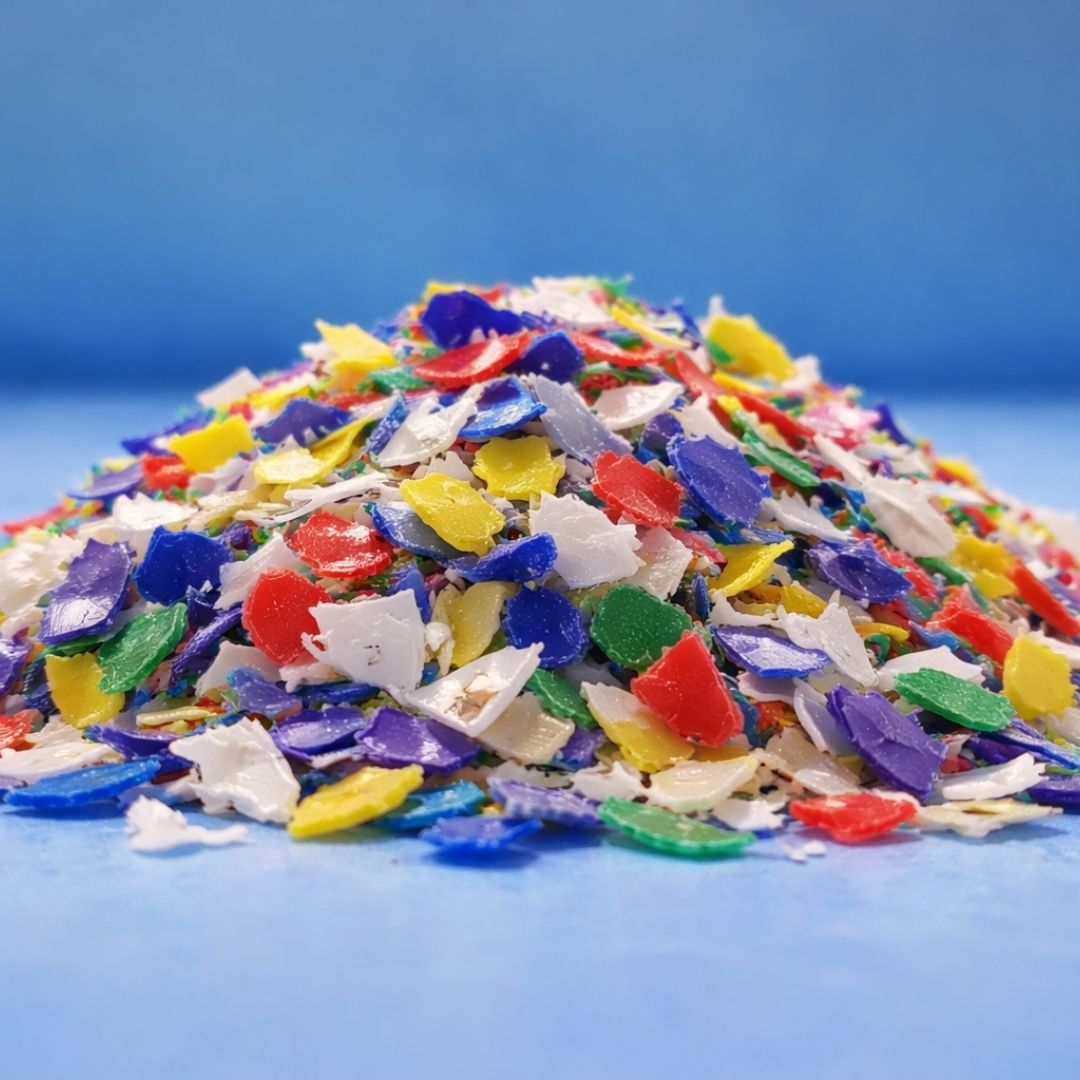 Recycled HDPE: Recycling, Process, and Industrial Applications
Recycled HDPE has become one of the most important secondary raw materials in the plastics industry. Its presence across numerous sectors, such as packaging, containers, crates, technical parts, and piping systems, combined with its strong recyclability, makes it a strategic material when properly managed.
However, working with recycled HDPE is not simply a matter of reusing waste. It is part of a complete industrial plastic recycling process that depends heavily on stream quality, contamination levels, and the control of reprocessing operations.
HDPE: A Key Material in the Plastics Industry
Main Characteristics of HDPE
High-Density Polyethylene, or HDPE, is a thermoplastic widely used because of its excellent balance between resistance, durability, and cost efficiency. It is commonly found in drums, containers, pipes, logistics crates, and various technical components.
Its stability and strong impact resistance allow predictable behavior during extrusion and injection molding processes, which facilitates mechanical recycling operations.
Properties That Favor Recycling
- Good chemical resistance.
- High durability in industrial applications.
- Easy processability through extrusion.
- Large availability in industrial and post-consumer waste streams.
- Good compatibility with certain technical and logistics applications.
Despite these advantages, recycling quality still depends heavily on material purity, contamination control, and batch stability during processing.
What Does Recycled HDPE Mean?
Recycled HDPE is a material produced from industrial or post-consumer waste that has been collected, sorted, cleaned, and reprocessed in order to become usable raw material again.
It is not a perfectly uniform product. Its properties vary depending on origin, processing quality, color, melt flow behavior, and transformation conditions.
Recycled HDPE vs Virgin HDPE
Virgin HDPE generally offers higher stability and homogeneity, while recycled HDPE may present variations in color, odor, density, or Melt Flow Index (MFI). Nevertheless, recycled HDPE remains a highly competitive solution for many industrial and logistics applications.
This distinction is essential in any industrial polymer recycling approach, since each plastic family reacts differently during sorting, washing, extrusion, and repeated processing cycles.
The HDPE Recycling Process
1. Sorting and Separation
The first stage consists of separating HDPE from other plastics. Efficient sorting is essential to avoid contamination that could compromise final product quality.
Sorting errors may introduce incompatible polymers, organic residues, labels, metals, or multilayer materials that are difficult to process correctly.
2. Grinding and Washing
Once sorted, the material is ground and washed in order to remove residues, labels, adhesives, and impurities. This stage is critical to ensure the stability of the future recycled pellets.
The washing level must be adapted to the waste stream origin. Clean post-industrial waste generally requires less intensive treatment than mixed or heavily contaminated post-consumer streams.
3. Drying and Material Preparation
After washing, the material is dried to reduce residual moisture and prepare it for extrusion. Excessive humidity may generate surface defects, bubbles, or instability during processing.
4. Re-Pelletizing Through Extrusion
The cleaned material is then melted and extruded to produce homogeneous pellets. Temperature, moisture, filtration, and throughput control are essential to obtaining industrially usable secondary raw material.
At this stage, pelletizing lines for recycled HDPE play a central role because they transform flakes or ground material into uniform pellets that are easier to dose, store, and reuse in new production cycles.
Types of Recycled HDPE
Post-Industrial Recycled HDPE
Produced from production scrap and clean industrial waste, post-industrial recycled HDPE is generally more stable and homogeneous. It is particularly suitable for technical applications requiring high repeatability.
Post-Consumer Recycled HDPE
Coming from products already used by consumers or industrial users, post-consumer recycled HDPE is more variable and requires more intensive processing. Nevertheless, it is widely used in non-critical applications or products where aesthetic appearance is secondary.
Industrial Applications of Recycled HDPE
Main Areas of Use
- Non-food packaging.
- Logistics crates and containers.
- Industrial technical parts.
- Light construction elements.
- Extruded, injected, or blow-molded products depending on material quality.
Industries Where Recycled HDPE Performs Well
Recycled HDPE is particularly suitable for logistics, agriculture, industrial manufacturing, and construction sectors. These industries often prioritize robustness, functional stability, and cost efficiency over aesthetics or strict regulatory requirements.
Its use should nevertheless be considered according to the life cycle of recycled plastics, from waste generation to reintegration into a new industrial application.
Advantages of Recycled HDPE
- High availability in industrial and post-consumer streams.
- Good stability once properly sorted, washed, and reprocessed.
- Competitive cost compared with virgin material.
- Wide range of industrial applications.
- Contribution to a more circular plastics economy.
Limitations and Challenges of HDPE Recycling
Material Variability
The main difficulty lies in stream heterogeneity. Differences in origin, color, formulation, or degradation level may generate performance variations.
Contamination
Organic residues, adhesives, incompatible plastics, or impurities may affect pellet quality and complicate transformation processes.
Thermal Stability and Repeatability
Even though HDPE is generally more tolerant than certain other polymers, repeated processing cycles may modify its properties. Temperature control, residence time management, and filtration therefore remain essential.
This approach differs from more sensitive materials such as PVC, where industrial PVC recycling requires even stricter thermal control to avoid polymer degradation.
How to Integrate Recycled HDPE into an Industrial Process
The integration of recycled HDPE must be considered globally: material quality, supply stability, final product requirements, and industrial process adaptation all play a role.
- Define the technical requirements of the final product.
- Control recycled material stability.
- Adapt transformation parameters.
- Implement strict quality control.
- Evaluate compatibility with existing equipment.
When these parameters are properly controlled, recycled HDPE can become a reliable secondary raw material capable of meeting regular industrial requirements while reducing dependence on virgin plastics.
Conclusion
Recycled HDPE represents a strategic industrial solution when integrated into a well-controlled production chain. Its performance depends directly on the quality of sorting, cleaning, drying, and reprocessing operations.
When properly managed, it allows manufacturers to transform waste streams into stable secondary raw materials, contributing to a more circular and efficient plastics economy.