 Recycling and pelletizing
9 types
Recycling and pelletizing
9 types
 Extrusion
8 types
Extrusion
8 types
 Mixing equipment
2 types
Mixing equipment
2 types
 Conveying and storage
8 types
Conveying and storage
8 types
 Drying and cooling
2 types
Drying and cooling
2 types
 Cutting, pressing and packaging
4 types
Cutting, pressing and packaging
4 types
 Plastic processing machinery
3 types
Plastic processing machinery
3 types
 Electromechanical equipment
7 types
Electromechanical equipment
7 types
 Miscellaneous machinery
11 types
Miscellaneous machinery
11 types
 PVC Recycling: Industrial Process, Applications, and Material Management
PVC recycling is one of the essential pillars of an efficient circular economy within the industrial and construction sectors. Recycled PVC represents a secondary raw material that must remain stable, traceable, and reusable in manufacturing processes.
Used in numerous applications such as pipes, profiles, ducts, technical films, and industrial components, PVC is a particularly valuable material at the end of its service life because of its durability and its ability to be reprocessed.
Before even discussing recycling, it is important to understand that PVC is not always immediate waste. In many cases, it can still be reused if it is properly evaluated, sorted, and redirected toward an appropriate secondary application.
Understanding PVC to Better Manage Its End of Life
PVC, or polyvinyl chloride, is a polymer widely used because of its durability, chemical resistance, and ability to be formulated in either rigid or flexible versions.
This versatility explains why PVC is present across many industrial sectors. It also explains why its end-of-life management must be organized methodically, taking into account the original application, the condition of the material, and its level of contamination.
A Material Designed to Last
Unlike many other plastics, PVC often retains its mechanical properties even after several years of use. It is therefore frequently removed from installations not because it has become unusable, but because of renovations, technical replacements, or regulatory updates.
This characteristic opens the door to two complementary approaches:
- Reuse when the material remains functional.
- Recycling when direct reuse is no longer possible.
To place PVC within a broader industrial context, it is useful to understand polymer recycling and industrial processes, since PVC forms part of a larger strategy for plastic material recovery.
PVC Reuse: The First Logical Step
Before recycling, it is often more efficient to reuse PVC whenever possible. Reuse reduces energy costs, limits waste generation, and decreases the need for virgin raw materials.
When PVC Can Be Reused
PVC may be considered reusable when it is:
- Structurally intact.
- Clean or easily washable.
- Free from critical contamination.
- Compatible with a new technical application.
This evaluation stage is especially important in industrial and construction sectors, where PVC pipes, profiles, or components can sometimes be reused in secondary applications.
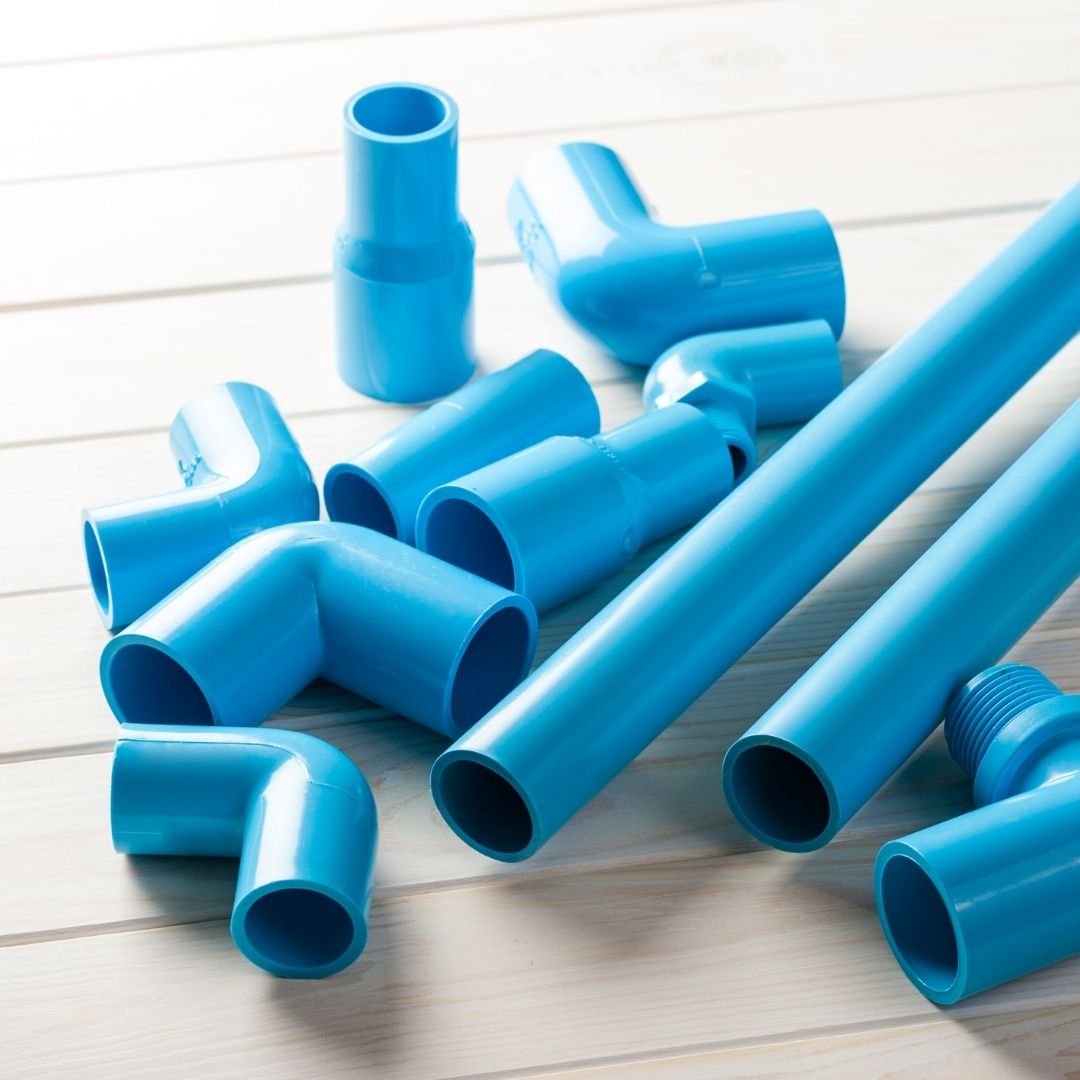
How to Reuse PVC Pipes
The reuse of PVC pipes must follow a technical evaluation process to guarantee safety and consistency for the new application:
- Check material integrity: cracks, deformation, impacts, or embrittlement.
- Identify the origin and previous use of the pipe.
- Clean the surface and remove possible residues.
- Evaluate compatibility with a new application.
- Assign an appropriate secondary use.
In industrial environments, these pipes may be reused for protections, auxiliary conduits, temporary installations, or non-critical applications.
When PVC Becomes Non-Reusable
Reuse reaches its limits when the material is contaminated, degraded, mixed with other materials, or when its origin is no longer sufficiently traceable.
In these situations, PVC recycling becomes the most appropriate solution to avoid disposal and recover usable secondary raw material.
Main Causes of Non-Reusability
- Mechanical or chemical degradation.
- Presence of difficult-to-remove contaminants.
- Mixing with other plastics or materials.
- Loss of traceability.
- Incompatibility with direct secondary use.
PVC Identification and Classification
PVC is identified by recycling code number 3. This marking facilitates preliminary sorting, even though it is not always visible on industrial products or construction waste.
Proper identification is essential for deciding whether the material can be reused or whether it should enter an industrial recycling process. It also helps avoid contamination with other plastics, which could reduce the quality of the recycled product.
It is also important to distinguish PVC from similar materials. For example, understanding the differences between PVC and CPVC makes it easier to direct each material toward the most appropriate application or treatment.
Industrial PVC Recycling Process
PVC recycling follows a structured industrial chain that transforms waste or scrap into secondary raw material suitable for new production cycles.
This process is part of the broader industrial plastic recycling process, where every stage directly influences the final quality of the recycled material.
1. Collection and Sorting
Sorting is an essential stage. Well-separated PVC guarantees more stable, more profitable, and higher-quality recycling.
The use of conveying, separation, and sorting systems helps reduce contamination with other materials and improves the quality of the incoming stream.
2. Grinding or Size Reduction
PVC is then ground into particles, chips, or flakes. This size reduction facilitates the following stages of washing, separation, drying, and transformation.
The grinding process must be adapted to the type of PVC being treated, its rigidity level, and the targeted final application.
3. Washing and Separation
Washing removes impurities such as dirt, dust, construction residues, adhesives, or certain surface contaminants.
Separation systems eliminate metals, unwanted materials, or incompatible fractions that could interfere with PVC recycling.
Proper washing is essential to guarantee recycled PVC quality and reduce processing problems during extrusion or pelletizing.
4. Recycling, Extrusion, and Pelletizing
Once cleaned and prepared, PVC can be processed through extrusion in order to produce secondary raw material in pellet or compound form.
Extruders used in plastic recycling play a central role here because they melt, homogenize, filter, and reshape recycled material.
In many cases, the final objective is to obtain stable and uniform pellets that can easily be reintroduced into production. PVC extrusion pelletizing therefore transforms flakes or ground material into more stable, homogeneous, and easily dosed raw material for manufacturing lines.
Mechanical and Chemical Recycling of PVC
Mechanical Recycling
Mechanical recycling is the most common recycling method for PVC. It consists of sorting, grinding, washing, drying, and re-extruding the material in order to obtain recycled raw material suitable for new applications.
This solution is especially appropriate for rigid, clean, and well-separated PVC streams such as industrial scrap, profiles, or pipes.
Chemical Recycling
Chemical recycling is used for more complex, heavily mixed, or difficult-to-process waste streams.
Its objective is to recover certain base components of the material or to process streams that cannot be efficiently recycled through traditional mechanical methods.
Products Obtained from PVC Recycling
PVC recycling mainly produces two forms of reusable material:
- PVC flakes obtained after grinding and washing.
- Recycled PVC pellets ready for transformation.
These materials can later be used for manufacturing profiles, pipes, technical components, industrial parts, sheets, or other applications compatible with recycled PVC properties.
Best Practices for Optimizing PVC Recycling
Source Separation
Avoiding contamination with other materials is essential to guarantee recycling quality. The earlier PVC is separated, the more efficient the industrial process becomes.
Material Cleanliness
Clean PVC reduces processing costs, limits equipment wear, and improves the quality of the final recycled product.
Sorting by Product Type
Separating pipes, profiles, films, industrial scrap, and mixed waste streams improves the recovery potential of each material category.
Stream Traceability
Traceability helps better understand material origin, properties, and limitations. It also facilitates the production of more stable and reliable recycled material.
Reuse and Recycling: A Combined Strategy
The best approach combines reuse and recycling. Reusable PVC should always be prioritized, while non-reusable material should be directed toward structured industrial recycling.
This strategy reduces waste, improves profitability, and optimizes resource utilization. It also supports a more efficient circular economy where PVC maintains its value for as long as possible.
Conclusion: Toward Optimized Industrial PVC Management
PVC recycling is not limited to a technical process. It is a complete organizational system that begins with material identification, continues through reuse whenever possible, and finally integrates appropriate industrial recycling operations.
Proper management transforms potential waste into stable, traceable, and reusable secondary raw material for new production cycles.
If you need plastic recycling machinery, feel free to contact us.