 Recycling and pelletizing
9 types
Recycling and pelletizing
9 types
 Extrusion
8 types
Extrusion
8 types
 Mixing equipment
2 types
Mixing equipment
2 types
 Conveying and storage
8 types
Conveying and storage
8 types
 Drying and cooling
2 types
Drying and cooling
2 types
 Cutting, pressing and packaging
4 types
Cutting, pressing and packaging
4 types
 Plastic processing machinery
3 types
Plastic processing machinery
3 types
 Electromechanical equipment
7 types
Electromechanical equipment
7 types
 Miscellaneous machinery
11 types
Miscellaneous machinery
11 types
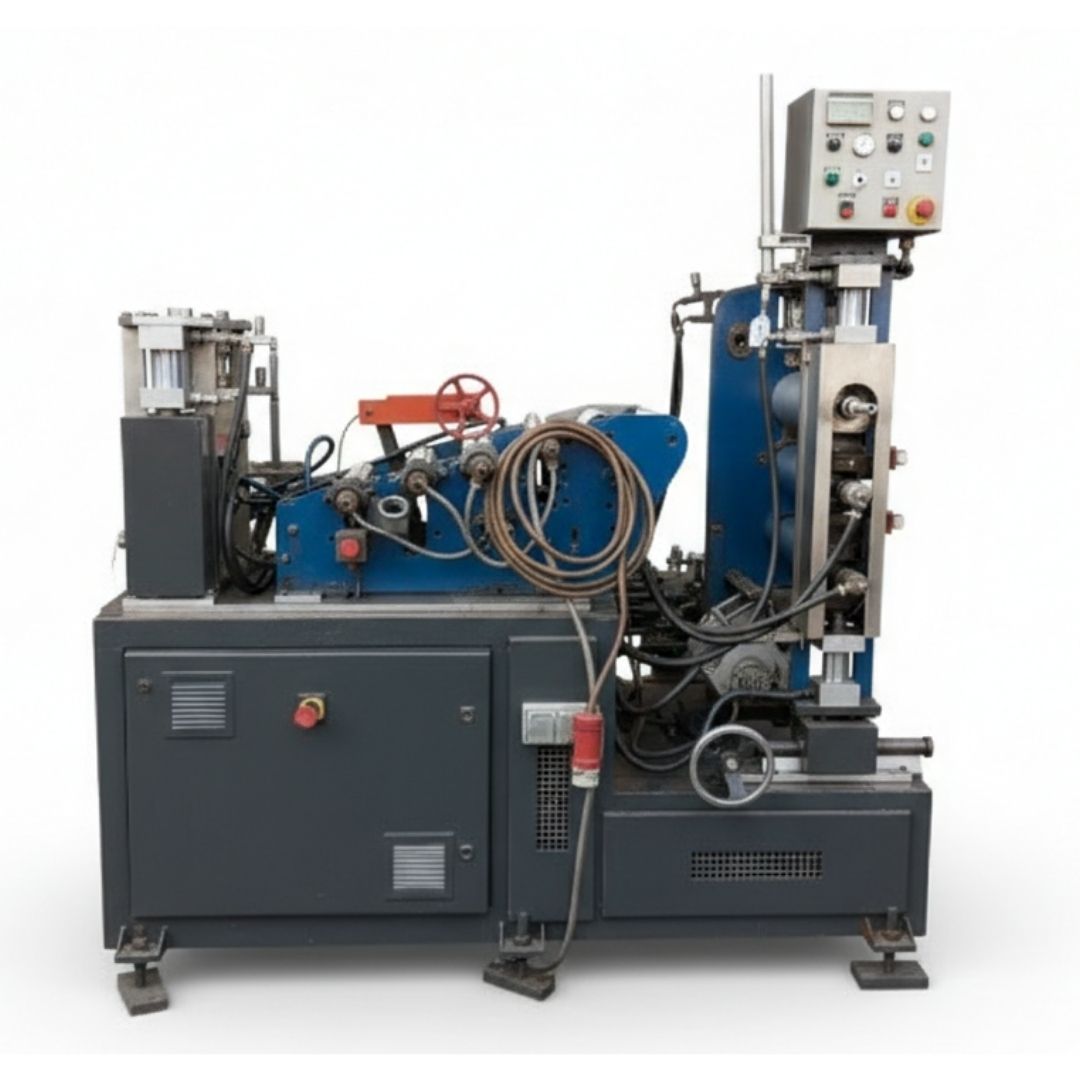
What Is Plastic Calendering?
Plastic calendering is a continuous industrial process used to transform polymers into sheets, films, or coatings with controlled thickness. It is particularly valued when production requires strong dimensional stability, homogeneous finishing, and precise surface quality.
In the plastics industry, calendering consists of passing a plasticized polymer through several heated and calibrated rollers. Through the combined effect of temperature, pressure, and line speed, the material progressively takes its final shape.
Technical Definition of Calendering
The technical definition of calendering can be summarized as follows: it is a shaping process in which a heated polymer is rolled between rollers in order to obtain a continuous sheet or film with uniform thickness.
This process is often associated with other advanced plastic processing technologies, because it responds to similar industrial requirements regarding precision, productivity, and process consistency.
Plastic Calendering Process
The calendering process is based on a succession of stages designed to stabilize the material and guarantee continuous and reliable production.
Main Stages
- Material preparation: mixing, plasticizing, and homogenizing the polymer.
- Passage through rollers: progressive formation of the sheet or film.
- Cooling: stabilization of the final geometry.
- Winding or cutting: adaptation of the product to the required industrial format.
In some production lines, calendering is combined with plastic extrusion and film manufacturing, especially when the material must first be prepared before being transformed into sheet or film form.
Calendering Machine: Operation and Components
A calendering machine generally includes several temperature-controlled rollers, gap adjustment systems, pulling units, cooling devices, and winding or cutting equipment.
Final product quality depends directly on the control of parameters such as roller temperature, applied pressure, production speed, and polymer blend stability.
To better understand the equipment integrated into this type of line, it may be useful to explore the different types of machines used in plastic processing.
Products Manufactured Through Calendering
Calendering makes it possible to produce continuous materials with high dimensional precision. It is commonly used for manufacturing:
- plastic sheets for thermoforming;
- technical films;
- industrial coatings;
- substrates intended for printing or laminating.
Calendered PVC is one of the most widespread examples because it provides strong stability, uniform surface finish, and excellent adaptability to industrial applications.
Companies looking for this type of production may also consider plastic sheet and film manufacturing machines, particularly suitable for continuous production lines.
Calendering vs Lamination
Calendering and lamination both use rollers, but their objectives are different. Calendering shapes the polymer from a plasticized mass, while lamination is mainly used to assemble, protect, or improve already existing layers.
In certain industrial installations, both technologies may be combined in order to produce multilayer materials or specific technical finishes.
Advantages and Limitations of Calendering
Advantages
- excellent thickness control;
- homogeneous surface finish;
- continuous high-output production;
- strong industrial repeatability.
Limitations
- high initial investment;
- demanding technical maintenance;
- strong dependence on material stability.
Calendering and Plastic Recycling
Calendering can also be integrated into production lines using recycled materials, provided that stable formulation and precise process control are maintained.
In this context, equipment such as single-screw extruders for plastic processing may be used upstream to prepare the material before it enters the roller section.
When Should Calendering Be Chosen?
Calendering is recommended when the final product requires uniform thickness, controlled surface finish, and continuous large-scale production. It is particularly suitable for films, sheets, coatings, and technical substrates requiring consistent industrial quality.
Looking for Industrial Machinery?
If you are looking for industrial machinery for plastic processing, extrusion, calendering, or plastic recycling, Gester can help you choose the solution best adapted to your material, process, and production objectives.
Contact us to find the machine that best fits your industrial production line.