 Recycling and pelletizing
9 types
Recycling and pelletizing
9 types
 Extrusion
8 types
Extrusion
8 types
 Mixing equipment
2 types
Mixing equipment
2 types
 Conveying and storage
8 types
Conveying and storage
8 types
 Drying and cooling
2 types
Drying and cooling
2 types
 Cutting, pressing and packaging
4 types
Cutting, pressing and packaging
4 types
 Plastic processing machinery
3 types
Plastic processing machinery
3 types
 Electromechanical equipment
7 types
Electromechanical equipment
7 types
 Miscellaneous machinery
11 types
Miscellaneous machinery
11 types
 What Does the Plastic Life Cycle Mean?
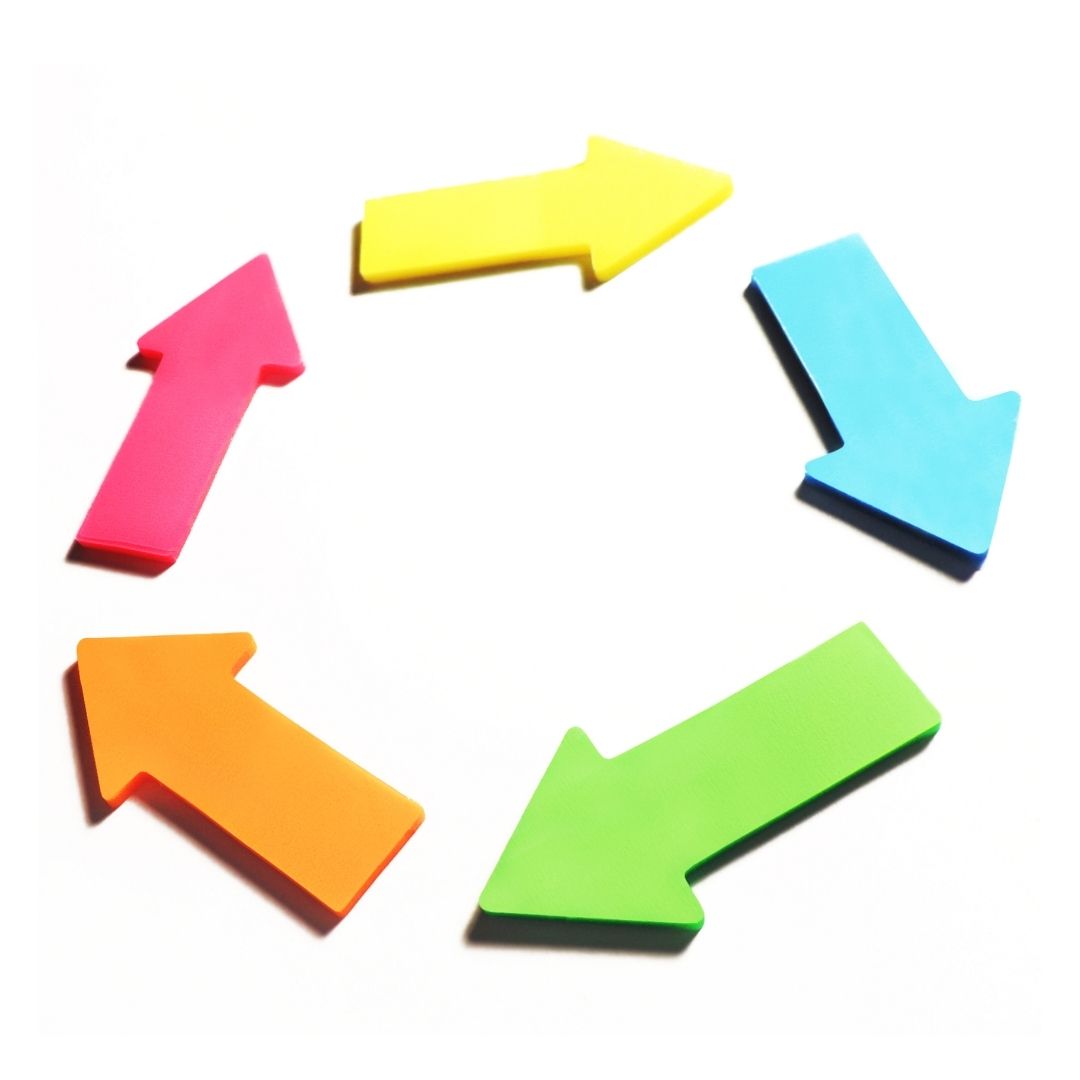
When discussing the plastic life cycle, the objective is not simply to understand where packaging comes from and where it ends up. The concept includes the entire journey of the material: raw material extraction, polymer production, industrial transformation, product use, collection, sorting, recycling, energy recovery, or final disposal.
In industry, this approach makes it possible to make more efficient decisions regarding material selection, packaging design, sorting technologies, and recycling processes. It also forms the basis of Life Cycle Assessment (LCA), which is used to measure the real environmental impact of plastic products.
Why the Plastic Life Cycle Is Not Linear
The life cycle of plastics does not follow a single path. Depending on the country, collection systems, sorting technologies, waste quality, and recycling markets, the same product may follow completely different routes after use.
A plastic package may be mechanically recycled, chemically recycled, used for energy recovery, or sent to landfill. Each scenario involves different economic, technical, and environmental consequences.
To better understand these differences, it is useful to analyze the complete plastic recycling process, because the end-of-life management of materials depends directly on industrial sorting, washing, extrusion, and pelletizing operations.
Main Stages of the Plastic Life Cycle
Raw Materials and Polymer Production
Most traditional plastics are produced from fossil-based resources. However, the use of recycled, bio-based, or hybrid materials is rapidly increasing across several industrial sectors.
This first phase concentrates a significant part of the environmental impact:
- energy consumption;
- emissions linked to polymer production;
- transportation of raw materials;
- selection of the resin type used.
Life Cycle Assessment often highlights major differences between virgin and recycled plastics, although results depend heavily on the polymer family involved: PE, PP, PET, PVC, or PS. For this reason, it is essential to understand the different types of plastics and their recyclability, since each family presents specific properties, limitations, and recovery possibilities.
Industrial Processing
Once the polymer has been produced, it is transformed using different industrial technologies:
- extrusion;
- injection molding;
- blow molding;
- thermoforming.
This stage plays a major role in sectors such as packaging, automotive manufacturing, construction, and footwear production. Product design directly influences future recyclability, especially when multilayer structures, additives, colorants, or polymer blends are involved.
Use of the Plastic Product
Even when packaging use is relatively short, the use phase strongly influences future recycling quality. Organic residues, grease, liquids, labels, inks, or contaminants considerably complicate the following processing stages.
In recycling centers, the material arrives with a “history” that directly determines recycled material quality, processing costs, and the possibility of reintegration into new industrial applications.
Collection, Sorting, and Preparation
Sorting currently represents one of the greatest challenges in plastic recycling. Without proper material separation, it becomes impossible to obtain stable, high-quality recycled material.
Sorting methods include:
- separation by polymer type;
- density-based sorting;
- optical color separation;
- contaminant detection;
- multilayer material identification.
Industrial preparation then includes grinding, washing, separation, drying, and, in many cases, filtration before extrusion.
Washing is particularly critical. Insufficient cleaning leads to odors, thermal degradation, black specks, visual defects, and quality losses during extrusion.
Recycling, Recovery, and Disposal
After sorting and preparation, several processing routes are possible depending on stream quality, material composition, and the economic viability of treatment.
Mechanical Recycling
Mechanical recycling remains the most widely used solution when the waste stream is sufficiently clean and homogeneous. The process generally includes:
- grinding;
- washing;
- drying;
- extrusion;
- filtration;
- pelletizing.
This route transforms plastic waste into reusable pellets suitable for new applications. It occupies a central role in polymer recycling within the plastics industry, especially for properly separated PE, PP, PET, or PS streams.
Chemical Recycling
Chemical recycling is mainly used for complex or heavily contaminated streams when mechanical recycling cannot achieve the required quality level. Its objective is to break polymers down into monomers, oils, or other reusable raw materials that can re-enter the production chain.
Energy Recovery
In some situations, plastic waste is used as an energy source through controlled combustion. This option may be considered when recycling is not technically or economically viable, although it does not preserve the material within the industrial cycle.
Landfilling
When no recovery solution is viable, waste is disposed of in landfill sites. This option generally represents the least favorable scenario within a circular economy strategy.
How a Life Cycle Assessment Works
1. Defining the Objective and Scope
LCA begins by precisely defining what is being compared:
- virgin plastic versus recycled plastic;
- PET packaging versus another material;
- mechanical recycling versus chemical recycling;
- local collection versus long-distance transportation.
The scope also includes transportation, collection, energy consumption, material losses, and the actual end-of-life management of the product.
2. Data Inventory
Manufacturers collect concrete industrial data:
- energy consumption;
- water consumption;
- raw materials;
- emissions;
- waste generation;
- production yields and losses.
These data are obtained directly from production lines, quality control systems, washing units, extruders, and treatment facilities.
3. Impact Assessment
The collected information is converted into environmental indicators:
- carbon footprint;
- energy consumption;
- water consumption;
- eutrophication;
- waste generation;
- resource depletion.
This stage helps better understand the environmental impact of plastic recycling and identify the conditions under which recycling provides the greatest benefits.
4. Interpretation of Results
The final objective is to identify “hot spots,” meaning the stages of the cycle where the most significant impacts are concentrated. This makes it possible to prioritize truly effective improvements such as better sorting, contamination reduction, optimized washing, reduced energy consumption, or improved packaging design.
Practical Example: The Life Cycle of a PET Bottle
The PET bottle is one of the most studied plastic products in Life Cycle Assessment. When properly collected and sorted, it can follow a highly efficient mechanical recycling route.
The process generally includes:
- grinding into flakes;
- separation of caps and labels;
- intensive washing;
- drying;
- extrusion;
- re-pelletizing.
The quality of recycled PET nevertheless depends on several factors: mixed colors, labels, caps made from different polymers, organic contaminants, and moisture levels.
The higher the collection rate and the lower the rejection rate, the lower the environmental impact becomes. Conversely, poorly sorted streams increase losses, energy costs, and treatment requirements.
Practical Example: Plastic Bags
For PE plastic bags, the main challenge is not always the polymer itself, but rather contamination within the waste stream.
The most common difficulties include:
- presence of dirt;
- high moisture levels;
- mixed material grades;
- inks and additives;
- low material density.
Lightweight bags also complicate automated separation systems because of their mechanical behavior. When the stream is clean, homogeneous, and well-prepared, mechanical recycling remains efficient. Otherwise, washing and drying costs increase significantly.
The Role of Design in Recyclability
Packaging design directly influences recyclability. Monolayer packaging is generally easier to sort and recycle than multilayer structures combining different polymers, technical barriers, complex adhesives, or specific inks.
This is why circular economy strategies place so much emphasis on eco-design. Simpler packaging, better identification, and compatibility with existing recycling systems significantly increase the chances of effective recycling.
Factors That Truly Influence the Plastic Life Cycle
Waste Stream Quality
The purity of the stream determines the final value of the recycled material and its reintegration potential within the market. The more homogeneous the stream is, the easier it becomes to obtain stable recycled material.
Washing and Contaminant Control
Industrial washing represents one of the most important stages for guaranteeing recycled material quality. It removes residues, dust, grease, adhesives, and other contaminants capable of degrading the final product.
Thermal Degradation
Each processing cycle may degrade polymer properties if temperatures, residence times, and extrusion conditions are not properly controlled.
Regulations and Market Conditions
European regulations increasingly encourage manufacturers to integrate recycled content and improve product recyclability. However, recycling can only function sustainably if recycled materials find stable and economically viable industrial applications.
Circular Economy and the Plastics Industry
The life cycle concept only becomes fully meaningful when connected to the circular economy. The objective is not simply to recycle, but to allow the material to return into the industrial system with minimal losses and maximum quality.
This requires:
- simpler packaging;
- fewer unnecessary material combinations;
- compatible additives;
- efficient sorting systems;
- stable industrial processes;
- reliable markets for recycled materials.
In this context, plastic recycling and pelletizing equipment plays a strategic role because it transforms prepared waste into reusable pellets suitable for new production lines.
Why Plastics Remain Essential
Plastic continues to be widely used because of its major advantages: lightweight properties, resistance, versatility, barrier performance, low cost, and manufacturing efficiency.
The current challenge is therefore not simply to replace plastic, but to improve how it is designed, collected, sorted, and recycled. A well-designed plastic integrated into an efficient recycling stream can maintain strong industrial value after its first use.
How to Improve the Plastic Life Cycle
Improvement Through Design
The fastest gains often come from simplifying packaging and improving recyclability. Reducing unnecessary material combinations, limiting problematic inks, and prioritizing structures compatible with existing recycling streams significantly improves end-of-life management.
Industrial Improvement
In manufacturing plants, progress mainly depends on quality control, process stability, efficient sorting, effective washing, adapted filtration, and optimized extrusion.
Development of the Recycled Material Market
Recycling can only function sustainably if recycled materials find stable and economically viable industrial applications. Demand for recycled pellets, quality consistency, and material traceability therefore become essential factors.
Conclusion
The plastic life cycle is above all a matter of industrial decisions: material selection, product design, collection systems, sorting technologies, washing quality, recycling stability, and recycled material applications.
When all these stages are properly connected, plastic is no longer perceived solely as problematic waste, but once again becomes a valuable industrial resource.